





No scientifically proven effect exists for commercially available CBD oils, as the German Federal Institute for Risk Assessment (BfR) also states. What can be checked, however, is what is actually in an oil: spectrum, cannabinoid content, THC value and carrier oil, all listed in the lab certificate for the respective batch.
This guide explains what the terms full spectrum, broad spectrum and isolate mean, why lab values reveal more than the label, and what role the carrier oil plays. It makes no promises of effect or use and gives no indications of quantity or use.
Classifying CBD Oil Effect: Full Spectrum, Broad Spectrum, Isolate
A CBD oil consists of two parts: an extract from the flowers and leaves of industrial hemp, and a carrier oil that dilutes the extract. Which substances from the plant remain in the extract is described by the spectrum. It is the most important distinction when asking about the effect of CBD oils, because it determines which cannabinoids are contained at all.
| Spectrum | What the extract contains | THC | In the CBDÍA range |
|---|---|---|---|
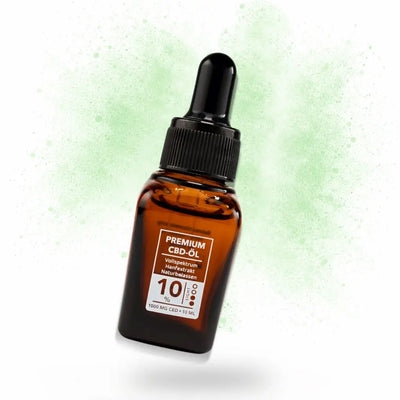
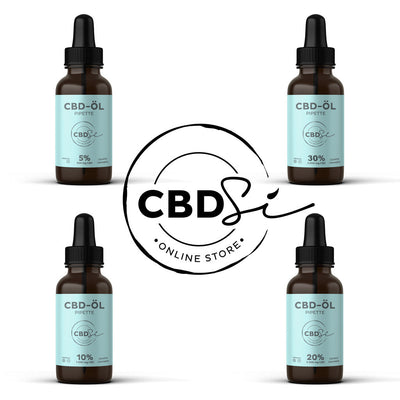
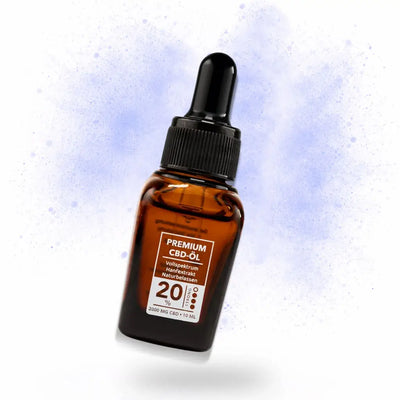
| Full spectrum | CBD plus other cannabinoids and plant compounds from industrial hemp | Traces, below 0.2 percent according to product information | four oils with 5, 10, 20 and 30 percent CBD |
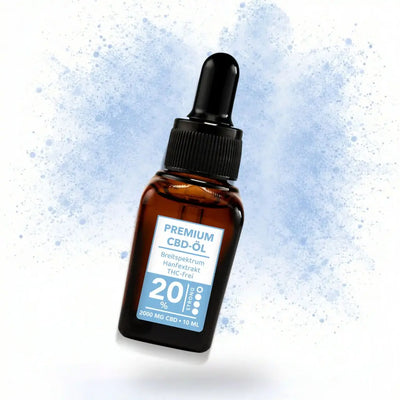
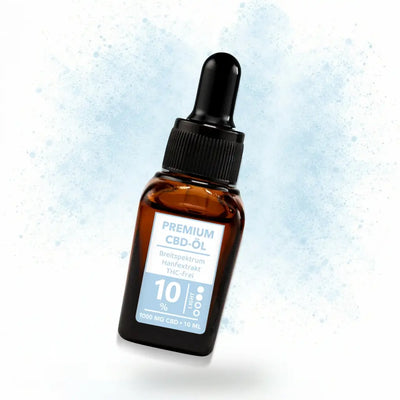
| Broad spectrum | CBD plus other plant compounds, THC removed | Stated as THC-free | two oils with 10 and 20 percent CBD |
| Isolate | only cannabidiol, other plant compounds removed | Not contained | not in the range |
CBDÍA’s CBD oils are full spectrum and broad spectrum oils from EU industrial hemp; there are also oils with CBG as an additional cannabinoid. Anyone wanting to know first what CBD is as a compound and how it differs from THC will find the basics in the guide’s pillar article.
What Distinguishes the Spectrums, and What Does Not
The spectrum describes the composition, not a specific effect. Whether a broader plant profile makes a difference for humans has not been scientifically established. Only the measurement is reliable: which cannabinoids are contained and in what quantity is shown by the lab certificate, not the name of the spectrum.
What Research Describes About the Effect of Cannabidiol
In 2024, the BfR noted that consumers hope, among other things, for relaxation and better sleep from CBD-containing oils, but that there is no sufficient scientific evidence for these effects. At the same time, according to the institute’s assessment, there are considerable gaps in knowledge regarding possible health risks.
Research investigates cannabidiol mainly in connection with the endocannabinoid system and other target structures in the body, predominantly in laboratory and animal experiments and in clinical trials with a medicine. What this work describes and where its limits lie is summarised in the article what is known about CBD effect. Which undesirable effects authorities and review papers name, and why interactions with medicines need to be clarified with a doctor, is explained in the article on CBD side effects.

Reading Lab Values: What a Certificate Reveals per Batch
The label states a CBD content in percent, the lab certificate shows what was actually measured. That the two can diverge is documented by independent studies. In 2024, the BfR analysed a total of 26 cannabinoid oils: manufacturers declared CBD, CBG and CBN contents of between 2.5 and 20 percent, while measured values ranged between 3 and 24 percent, and Δ9-THC was found in 20 of the 26 samples. A study of 14 oils traded in Europe found in 2018 that nine of them deviated significantly from the declared CBD content.
On a lab certificate, it is therefore worth looking at these values:
- CBD and CBDA: the measured content compared with the figure on the label
- Δ9-THC and THCA: whether the THC value stays within the product specification
- other cannabinoids: such as CBG, CBN or CBC, which make the spectrum visible
- batch number: whether the certificate matches the bottle and not just the product line
At CBDÍA, a lab certificate is publicly accessible for every product and every batch. It describes the composition and makes no statement about any effect.
Carrier Oil: Why Hemp Seed Oil Provides No CBD
The extract makes up only part of the oil; the carrier oil forms the larger part. It determines taste, colour and consistency and influences how stable the oil remains: the 2018 study suggests using the oxidation products of the carrier oil as an indicator of an oil’s shelf life.
All oils in the CBDÍA range use hemp seed oil as their base; for the two broad spectrum oils, it comes from organic farming. Important for classification: hemp seeds do not carry glandular hairs and therefore do not produce cannabinoids themselves. The BfR describes hemp seeds as rich in amino acids and fatty acids; measured THC traces in seed products are regarded as contamination from contact with flowers. The cannabidiol in a CBD oil therefore comes from the extract, not from the hemp seed oil.

Origin and Cultivation as Part of the Product Information
Besides the lab values, origin and cultivation type are among the details that can be traced for each product. The full spectrum and broad spectrum oils in the range come from outdoor cultivation in the Netherlands, based on industrial hemp strains from the EU catalogue. They are produced by CBDSÍ, the manufacturer of our oils, which publishes its own classification of the research on its own site. Lab certificate per batch, origin with country and cultivation type, and the THC value below 0.2 percent for the oils are the details CBDÍA relies on as proof of quality.
Legal Framework: Novel Food and Labelling
CBD does not appear in any schedule of the German Narcotics Act (BtMG), and industrial hemp products are excluded from the definition of cannabis under the German Consumer Cannabis Act (KCanG). As a food, however, CBD extracts are not approved in the EU: the European Commission classifies CBD as a novel food, and in 2022 the EFSA stated that its safety as a food cannot be assessed with the data available. According to the BfR, no corresponding product has been approved to date. This article therefore contains no information on consumption or quantity. Not legal advice, as of: September 2026.
In Short
No effect of commercially available CBD oils has been demonstrated. An oil can be classified by its spectrum, its lab values and its carrier oil: full spectrum contains other cannabinoids and THC traces, broad spectrum is stated as THC-free, an isolate contains only cannabidiol. Because measured and declared contents have diverged in studies, the lab certificate per batch is the most reliable proof of composition. Sale only to adults aged 18 and over.
This article is for general information purposes only and does not replace medical advice. As of: September 2026.