




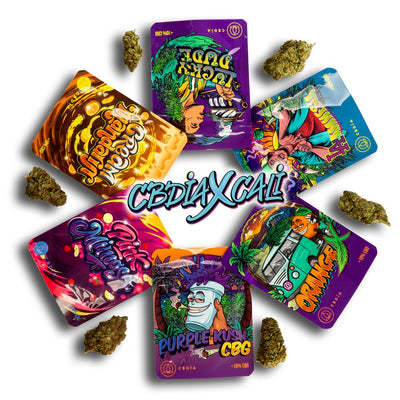
Anyone dealing with cannabidiol for the first time encounters many terms at once: CBD, cannabinoids, hemp, full spectrum, THC limit. This guide puts the basics into factual context: what cannabidiol is chemically, where it comes from, how it differs from THC and CBG, in which product forms it occurs, and what legal framework applies in Germany. It deliberately makes no effect or usage promises.
What exactly is CBD: cannabidiol as a cannabinoid of the hemp plant
CBD is the abbreviation for cannabidiol, a naturally occurring constituent of the hemp plant (Cannabis sativa L.). Cannabidiol belongs to the group of phytocannabinoids, i.e. plant cannabinoids. The World Health Organization describes cannabidiol in its 2018 Critical Review Report as one of the cannabinoids naturally occurring in cannabis plants, which is formed from its acidic precursor, cannabidiolic acid (CBDA), through decarboxylation, and which can also be produced synthetically.
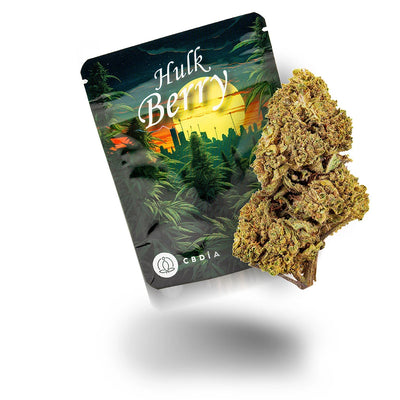
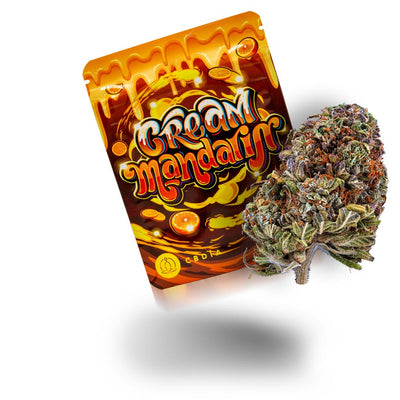
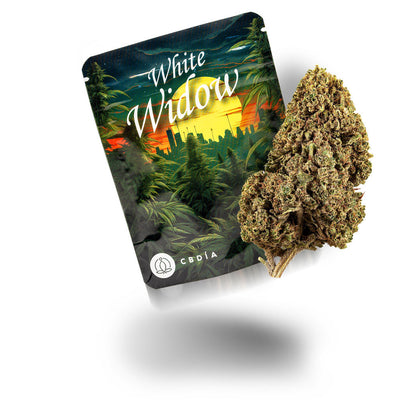
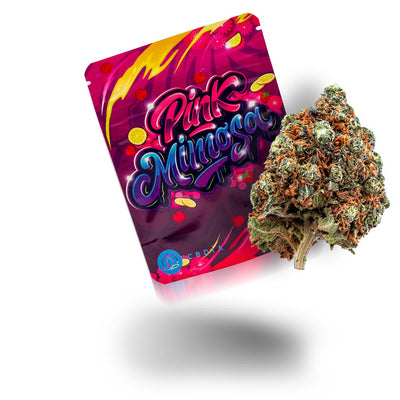
Alongside THC (tetrahydrocannabinol), cannabidiol is the best-known cannabinoid. In hemp varieties as permitted for cultivation in the EU, it is usually the one present in the largest amount. This is why CBD flowers, CBD hash and CBD oils come from such varieties: the CBD content is pronounced, the THC content is below the legal limit of 0.3 percent.
Important for a basic understanding: cannabidiol is a single substance, cannabis is the plant. Statements about the plant, about a single constituent and about a finished product are therefore not interchangeable.
Cannabinoids at a glance: where cannabidiol fits in
Cannabinoids are a group of chemically related compounds. The hemp plant forms them in the glandular hairs (trichomes) of its flowers. Research knows a large number of phytocannabinoids; however, only a few occur in notable amounts, chiefly CBD, THC, CBG and CBC with their respective acid forms.
The shared precursor CBGA
In the growing plant, cannabigerolic acid (CBGA) forms first. The plant's own enzymes convert it into the acid forms CBDA, THCA or CBCA. Which of these predominates is determined by the genetics of the variety. In hemp varieties, the pathway to CBDA is strongly pronounced. How the sister cannabinoid cannabigerol differs from this is explained in the article What is CBG.
From the acid form to cannabidiol
In the fresh plant, cannabidiol is present predominantly as CBDA. Only heat, light or longer storage split off a carbon dioxide molecule. This process is called decarboxylation. A laboratory certificate therefore often states both values separately, CBDA and CBD, and sometimes a calculated total content.

How cannabidiol differs from THC and CBG
THC and cannabidiol have the same molecular formula but are structured differently. THC is responsible for cannabis's intoxicating effect. For cannabidiol, the WHO Expert Committee found that it shows no evidence of abuse or dependence potential in humans. The differences in structure, legal status and detection are described in the article on the difference between CBD and THC.
What research describes about the interaction of cannabidiol with the body, for example with the endocannabinoid system, is a separate topic. The state of studies, open questions and known side effects are summarised in the guide on CBD effects.
Full spectrum, broad spectrum and isolate
CBD products frequently carry three terms that describe what else is contained besides cannabidiol:
- Full spectrum: The extract contains, besides cannabidiol, further cannabinoids of the plant, terpenes and traces of THC within the legal framework.
- Broad spectrum: Like full spectrum, but with THC largely removed.
- Isolate: Isolated, crystalline cannabidiol without further plant substances.
Whether several plant substances together might act differently than a single one is discussed under the keyword entourage effect. This hypothesis is not robustly proven. For classifying a product, what matters most is therefore what the analysis of the specific batch shows. What the spectrum terms and lab values concretely mean for oils is shown in the guide on CBD oil effects.

Product forms: flower, hash and oil
You encounter cannabidiol on the market in different forms. They differ in whether the plant remains largely unchanged or whether cannabidiol is extracted:
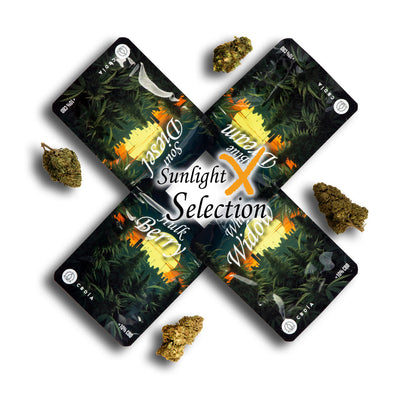
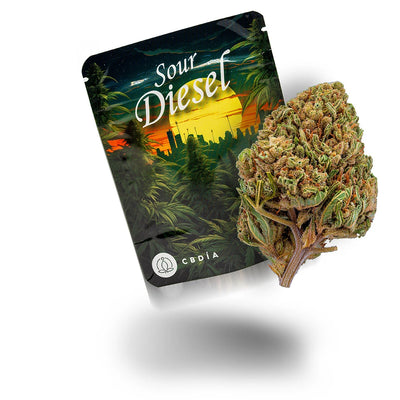
- Flowers: dried flower heads of hemp varieties with their natural cannabinoid and terpene profile.
- Hash: pressed resin from the trichomes of the flowers.
- Oils: extract in a carrier oil, at CBDÍA based on hemp seed oil.
- Liquids and vapes: extract in a carrier liquid.
The same basic question applies to all forms: which cannabinoids are contained in what proportion can only be answered through the analysis of the specific batch, not through the product name.
Legal framework in Germany: BtMG, KCanG and Novel Food
Cannabidiol is not listed in any schedule of the German Narcotics Act (BtMG). The German Consumer Cannabis Act expressly excludes CBD from the definition of cannabis in Section 1 No. 8 (b) KCanG. For plant material, the definition of hemp in Section 1 No. 9 KCanG is additionally decisive: seed from the common EU variety catalogue or a THC content of at most 0.3 percent, and distribution exclusively for commercial or scientific purposes that rule out abuse for intoxicating purposes.
Independently of this, a separate rule applies to food: CBD extracts are not approved as food in the EU. The European Commission classifies cannabidiol as a novel food, and in 2022 the EFSA named data gaps that must be closed before a safety assessment. Which questions remain open here and how the legal situation looks specifically for flowers is answered in the article Are CBD flowers legal. Which side effects and interactions authorities and studies have described so far is summarised in the article on CBD side effects. CBDÍA only supplies products to adults aged 18 and over.
Laboratory certificate, origin, EU variety: how to recognise transparent products
Because name and packaging reveal little about the content, three verifiable pieces of information count:
- Laboratory certificate per batch: it states the content of CBD, CBDA, THC and other cannabinoids for exactly the batch a product comes from.
- Origin with country and cultivation type: indoor, greenhouse or glasshouse, plus the country of cultivation.
- Variety from the EU variety catalogue: the hemp variety is publicly verifiable.
CBDÍA publishes this information for its range; the laboratory certificates can be viewed per product and batch. A certificate proves measured values; it is not proof of an effect.
The essentials summarised
Cannabidiol is a non-intoxicating cannabinoid of the hemp plant that occurs in a particularly pronounced form in hemp varieties and is formed from the acid form CBDA. It is not a narcotic in Germany and is expressly excluded from the cannabis definition under the KCanG; as a food it is not approved in the EU. Whether a product delivers what it promises is shown not by the name but by the laboratory certificate of the batch. How studies examine individual questions about cannabidiol can be read using the example of the studies on CBD and quitting smoking.
This article is for general information purposes only and does not replace medical advice. Not legal advice. As of: September 2026.