





CBG Definition: What Is Cannabigerol?
Cannabigerol is a naturally occurring phytocannabinoid that is formed exclusively in the cannabis plant and has no intoxicating properties. The abbreviation CBG stands for the scientific name of the molecule.
CBG owes the designation "mother of all cannabinoids" to its biochemical function: in the young hemp plant, cannabigerolic acid (CBGA) forms first, which serves as a precursor for the formation of other cannabinoids such as cannabidiol (CBD) or tetrahydrocannabinol (THC). Without this starting compound, the plant could not synthesise any further cannabinoids.
The chemical structure of cannabigerol differs significantly from psychoactive substances such as THC. While THC binds to certain receptors in the brain and thereby triggers intoxication, CBG interacts differently with the body's endocannabinoid system, without comparable psychoactive effects.
Among the numerous known cannabinoids of the cannabis plant, CBG is one of the so-called minor cannabinoids. This designation does not refer to its importance, but to the low concentration: in mature cannabis plants, CBG usually makes up only a small part of the total cannabinoids, because it is converted into other compounds during the ripening process.

Cannabigerol as a Cannabinoid: Understanding the Basics
Cannabinoids are chemical compounds that interact with the human body's endocannabinoid system, and CBG occupies a special position among them as a precursor substance.
To understand the role of CBG, it helps to look at plant botany: in the early growth phase, the hemp plant first produces cannabigerolic acid (CBGA). This acid form is the actual biochemical starting point. CBGA is converted by specific enzymes into THCA (tetrahydrocannabinolic acid), CBDA (cannabidiolic acid) and CBCA.
The transition from CBGA to CBG occurs through a process called decarboxylation. In this process, a carboxyl group is split off through exposure to heat, for example through sunlight or the drying process. The result is the neutral cannabinoid CBG, as it occurs in products.
|
Substance |
Form |
Function |
|---|---|---|
|
CBGA |
Acid |
Original precursor |
|
CBG |
Neutral |
Neutral form |
|
CBDA/THCA |
Acids |
Downstream cannabinoids |
In mature hemp plants, CBG is found only in small amounts, because most of it has already been converted into other cannabinoids. This conversion is a natural part of plant growth.
As a phytocannabinoid, that is, a plant-based cannabinoid, CBG differs from the endocannabinoids produced by the human body itself. However, both classes of substances can interact with the same receptors.
How Does Cannabigerol Differ from Other Cannabinoids?
CBG differs from CBD and THC both in its biochemical structure and in its function within the plant, but above all in the fact that it represents their common precursor. Cannabichromene also forms from the same precursor; what characterises this cannabinoid is explained in the article What Is CBC.
The difference between CBG and CBD already begins at the molecular level: although both come from the same plant and are not psychoactive, they have different chemical structures. CBG is practically the precursor of CBD. During the ripening process, cannabigerolic acid is enzymatically converted into cannabidiolic acid, which later becomes CBD.
The distinction from THC is even clearer: THC binds strongly to CB1 receptors in the brain and thereby produces the well-known intoxication. Laboratory studies show that CBG binds to CB1 and CB2 receptors; nevertheless, it is described in the scientific literature as not psychotropic. More on CBG effect in the dedicated article.
Comparison Table of the Three Cannabinoids
|
Property |
CBG |
CBD |
THC |
|---|---|---|---|
|
Psychoactive |
No |
No |
Yes |
|
Concentration in mature plant |
Low |
Medium-high |
Variable |
|
Biochemical role |
Precursor |
End product |
End product |
|
Legal framework (DE) |
Industrial hemp, at most 0.3% THC |
Industrial hemp, at most 0.3% THC |
Consumer Cannabis Act |
As a precursor cannabinoid, CBG occupies a unique role: without cannabigerol and its acid form CBGA, neither CBD nor THC would form in the plant. This function as a "stem cell" makes cannabigerol particularly interesting for research, since understanding its conversion processes could have implications for the breeding and cultivation of cannabis. Learn more about the difference between CBD vs CBG.
Forms and Product Types
CBG is offered in various product forms, for example as flowers or as an extract in oil, which differ in composition and concentration.
What Is a Cannabigerol Oil?
CBG oil consists of cannabigerol extract dissolved in a carrier oil. Hemp seed oil, MCT oil or olive oil are often used as carrier oils. The quality of the oil depends on several factors: the extraction method, the purity of the CBG extract and the quality of the carrier oil used. Learn more about CBG oils.
What Are High-Cannabigerol Flowers?
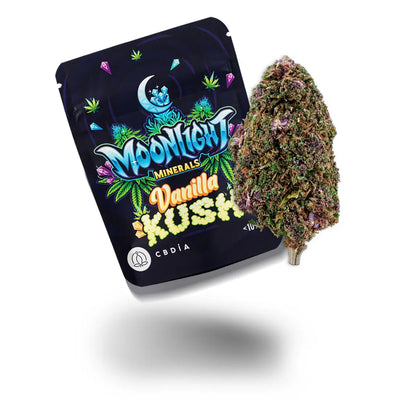
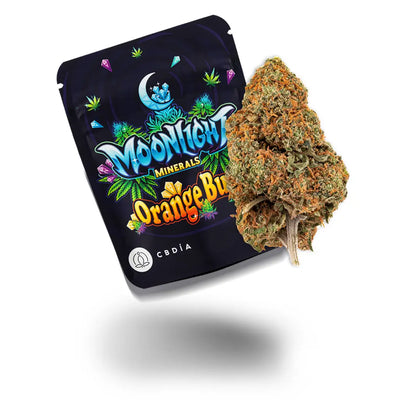
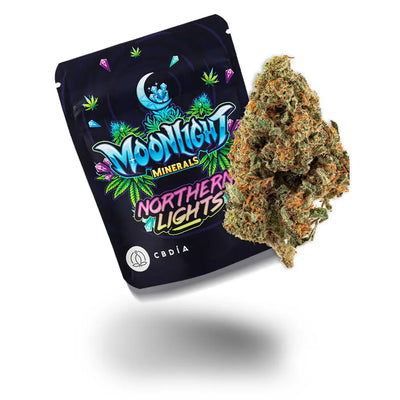
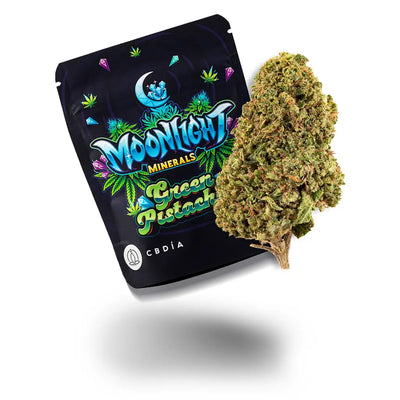
CBG flowers are hemp flowers from specially bred cannabis plants that have a particularly high CBG content. To achieve high cannabigerol concentrations, these plants are often harvested earlier, before most of the CBG is converted into other cannabinoids.
Isolate vs. Full Spectrum
With CBG products, a distinction is made between:
-
CBG isolate: Pure cannabigerol without other cannabinoids
-
Full-spectrum products: Contain the entire phytocannabinoid spectrum of the plant, including CBD, CBC (cannabichromene), CBN (cannabinol) and other constituents
-
Broad-spectrum products: Full spectrum without THC
Full-spectrum products contain other cannabinoids and plant substances besides CBG; the lab certificate of the batch shows which composition is present.

Occurrence and Formation in the Hemp Plant
CBG occurs naturally in all cannabis and hemp varieties, but in significantly smaller amounts than CBD or THC, which is why special breeding and early harvest times are decisive for extraction.
In conventional hemp plants, the CBG content at harvest is usually well below that of CBD or THC. The reason: during the ripening process, the plant converts most of the CBGA into THCA, CBDA and other acids. Heat and sunlight additionally accelerate this transformation.
Optimal Harvest Time
Higher CBG proportions are found more in earlier developmental phases, because CBGA is converted into other cannabinoids as ripeness progresses. At this point, enzymatic conversion has not yet fully taken place. An early harvest secures higher CBG amounts but often means lower overall yields.
Varieties with a High Cannabigerol Content
Through targeted research and breeding, hemp varieties have now been developed that:
-
Show higher CBGA production
-
Show slower enzyme activity
-
Can achieve significantly higher CBG proportions in the cannabinoid profile
Extraction Methods
The most common methods for CBG extraction include:
-
CO₂ extraction: Uses carbon dioxide under pressure as a solvent
-
Ethanol extraction: Uses alcohol as a solvent, which is subsequently removed again
-
Lipid extraction: Uses fats as a solvent
The high effort involved in cultivation, early harvest and extraction explains why CBG products often have a higher price than comparable CBD products.

The Lab Certificate: Basics to Read Up On
Anyone wanting to know how much CBG a product actually contains will not find the answer in the product name, but in the lab certificate of the batch. There, the individual cannabinoids are listed separately.
Which Values an Analysis Certificate Shows
An analysis certificate usually lists CBG and its acid form CBGA separately, plus CBD, CBDA, THC and THCA as well as other cannabinoids. Because CBGA decarboxylates to CBG when heated, many labs additionally state a total value. For this, the CBGA proportion is converted using the factor 0.878, which results from the difference in molecular masses, and added to the free CBG. The THC value shows whether the industrial hemp used complies with the limit of at most 0.3 percent.
-
Analysis method: Cannabinoids are usually determined using high-performance liquid chromatography (HPLC), because it captures acidic and neutral forms separately.
-
Batch reference: A certificate applies to the tested batch, not to a variety in general.
-
Terpene profile: Some certificates additionally contain the most important terpenes, which shape aroma and taste.
Oil or Flowers: Comparing the Product Forms
CBG oil and CBG flowers differ mainly in production: an oil contains an extract in a carrier oil, while flowers are dried plant material with the natural spectrum of cannabinoids and terpenes. The figures in the certificate therefore refer, for flowers, to the proportion by weight of the flower, and for oils, to the content in the product. For extracts intended for consumption, Novel Food law applies in the EU; there is no approval for CBG as a food. Here you can read about experiences with CBG.
This article serves general information purposes only and does not replace medical advice. CBDÍA's CBG products are not medicinal products and are offered without any recommendation for consumption or use. As of: September 2026.