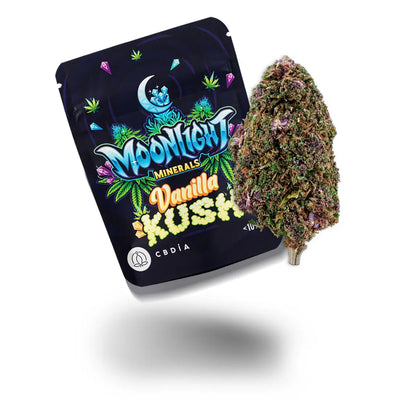






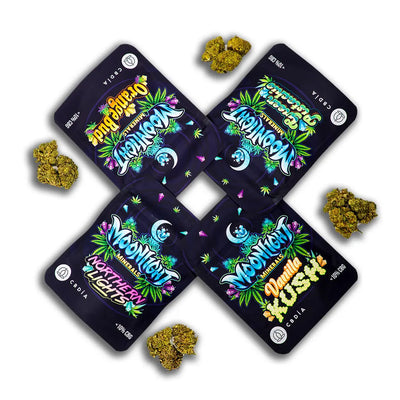
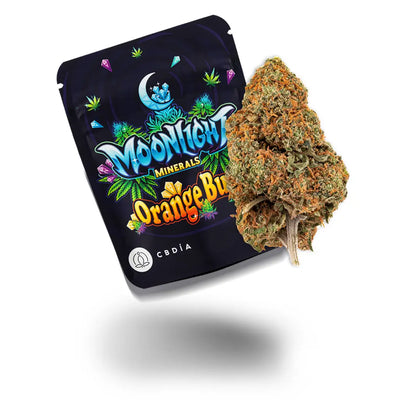
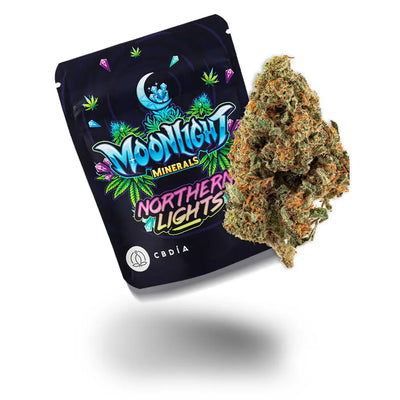
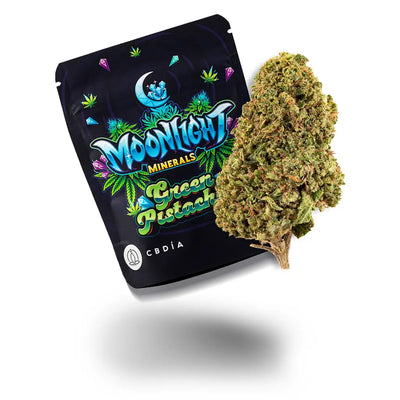
If you’re wondering, “What is CBG?”, you’ve come across a cannabinoid from the hemp or cannabis plant that gets far less attention than CBD. CBG, short for cannabigerol, is considered an early precursor of various cannabinoids and is therefore of particular interest from a botanical and chemical point of view. In this guide, Jona Decker sets out what is known about CBG (cannabigerol) and which basics matter for a factual understanding. You can find an overview of the available strains in our CBG Flowers category.
The focus here is not on blanket promises about the effects of CBG, but on comprehensible information: how does CBG form in the plant, how does it differ chemically from CBD, and what matters when it comes to quality, analysis and classification? This provides a solid basis for putting statements about CBG into perspective.
What is CBG?
CBG stands for cannabigerol and belongs to the group of cannabinoids, the chemical compounds found in the cannabis plant. Anyone asking “What is CBG?” often comes across its classification as a precursor: CBG is closely related to CBGA, an acidic starting form from which, among other things, other cannabinoids can form as the plant matures. This is why CBG is usually present in only comparatively small amounts in many plants.
In the context of “CBG cannabigerol”, the focus is mainly on chemical properties and the distinction from well-known substances such as CBD or THC. CBG is not the same as CBD; the difference lies in the molecular structure, its occurrence in the plant and the respective scientific perspective. Searches for “CBG effects” should be understood factually: a possible effect of CBG is being researched; no established claims of benefit can be derived from this. It is therefore important to distinguish between laboratory findings, theoretical properties and substantiated statements about effects. Even compared with CBD, research into the properties of CBG remains a young field.
How does CBG form in the cannabis plant?
CBGA as a precursor
In the cannabis plant, the formation of many active compounds begins with CBGA, the acidic form of CBG. This compound is considered a central precursor from which various cannabinoids can form through the plant’s own enzymes. Depending on the plant’s genetic makeup, CBGA is converted, among other things, into precursors of THC, CBD or CBC. CBG (cannabigerol) is therefore biochemically closely linked to several other cannabinoids and is often described as a starting point in cannabinoid metabolism.
Why CBG is often only present in small amounts
Anyone asking “What is CBG?” quickly comes across an important point: CBG is usually present only in small amounts in mature plant material. The reason lies in the plant’s development. As the hemp plant grows, CBGA is continuously converted into other cannabinoids by enzymes. The longer this process runs, the less unchanged precursor remains. This is why many strains contain only low CBG concentrations by the end of the ripening phase.
Breeding and harvest timing
How much CBG remains in the plant depends heavily on the strain, growth stage and harvest window. Some breeding programmes are designed to limit the conversion of CBGA into other cannabinoids. An earlier harvest can also favour higher CBG levels, but at the same time changes the rest of the cannabinoid profile. Such differences are relevant for research because they show how dynamic the chemical composition of the cannabis plant is.

How is CBG obtained and tested?
Extraction from EU hemp strains
Extraction begins with EU-compliant hemp strains that are approved under the variety catalogue and must comply with defined THC limits. For CBG flowers, the specific plant batch is decisive: origin, growing area, harvest time and drying all influence how much CBG is present in the hemp plant. Controlled raw materials provide the basis for later analyses to remain traceable and for batches to be clearly identified.
Extraction and further processing
After harvesting, CBG is obtained from dried plant material and further processed depending on the intended product. Various extraction methods are common, for example using CO₂ or suitable solvents, followed by filtration, purification and, where applicable, concentration. CBG (cannabigerol) is present here together with further cannabinoids and plant compounds; processing aims to capture these components in a controlled way without leaving behind unwanted residues.
Analysis of cannabinoid and terpene profile
Whether CBG is present, and in what composition, is only shown by laboratory testing. CBG is quantified in the process; other cannabinoids, the terpene profile and possible residues are also examined. Batch testing plays an important role here: for each batch, a lab certificate can document the properties of the material, how high the THC content is and whether purity criteria are met. This means CBG is not only obtained, but also transparently verifiable.
CBG vs. CBD: what is the difference?
Is CBG better than CBD?
When it comes to CBG vs. CBD, it’s not about a blanket ranking. Both substances have their own properties and are considered separately in research. Anyone asking “What is CBG?” ends up with a cannabinoid that has a different chemical profile from CBD. The effects of CBG also cannot simply be transferred to CBD: effects, context of use and the available data must each be assessed separately.
Similarities between CBG and CBD
CBG (cannabigerol) and CBD both belong to the cannabinoids of the hemp plant. They are not the same, but share a plant origin and are related to other cannabinoids. CBD and CBG are obtained from plant material and then further processed depending on the product. Statements about effects and CBG experiences should remain cautious, since research into CBD, and especially into CBG, has not yet conclusively answered every question.
Differences in profile and availability
The most important difference between CBG and CBD lies in the quantity: CBD occurs far more often in many hemp strains, while the concentration of CBG is usually lower. Obtaining CBG can therefore be more involved. CBD is better known on the market, and CBD products are more widely available and more established. When it comes to CBG vs. CBD, it is therefore not only chemical properties that differ, but also availability, pricing and how well known each is. The possible effects of CBG and CBD are studied separately; other factors such as strain, extract and composition also play a role.

CBG flowers in Germany: what matters?
EU variety catalogue and THC limit
For CBG flowers in Germany, it is crucial that the hemp used comes from approved strains from the EU variety catalogue. In addition, the THC content must be below 0.3 percent. This limit forms an important legal and quality framework: only if THC is present in low amounts can the corresponding CBG products be classified as lawful in Germany.
Lab certificate per batch
A batch-specific lab certificate shows which cannabinoids are present in the respective CBG flowers and whether the THC level is below the limit. For consumers, this provides key orientation, because CBG can vary in natural products. Reputable products therefore disclose analysis values transparently, rather than making only general statements about CBG or THC.
Supply only to adults aged 18 and over
CBG flowers and comparable products should only be supplied to adults aged 18 and over. In Germany, this note is part of responsible handling of the category. Even where an offer is described as legal, this does not replace checking the origin, THC content and lab certificate; this is precisely where the relevant quality benchmark lies.
What role do analysis and research play?
Lab values instead of promises
With CBG (cannabigerol), verifiable lab values matter more than claims about the effects of CBG. Analyses show which cannabinoids are present in a sample, how high the proportion of CBG is, and whether THC is below the legally relevant limit. Terpene profiles and possible residues also provide indications of properties and quality. This allows products to be compared factually, without deriving a specific effect from individual measured values.
Market developments around CBG
Research into CBG is at an early stage and is examining, among other things, how various cannabinoids form in the plant. For the market, what matters most is that breeding and analytics are making CBG-rich strains more widely available. As a result, CBG flowers, extracts and other products with a documented cannabinoid profile are becoming more common. Compared with CBD or THC, however, the available data remains more limited. Market observations can show which strains are available; they do not, however, replace controlled research into effects or interactions with other cannabinoids.
Conclusion: CBG in factual terms
The question “What is CBG?” can be answered mainly in botanical and chemical terms: CBG (cannabigerol) is a cannabinoid closely linked to the development of other plant compounds. Compared with CBD, the formation, availability and property profile differ. Anyone interested in CBG flowers should therefore focus less on promises of benefit and more on transparent information about origin, analysis values and processing. This keeps the classification of CBG factual and comprehensible.
This article provides general information about CBG and replaces neither legal nor medical advice. The information is current as of August 2026. The corresponding products are supplied exclusively to adults aged 18 and over.