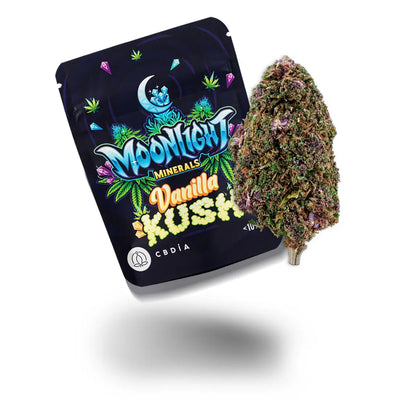






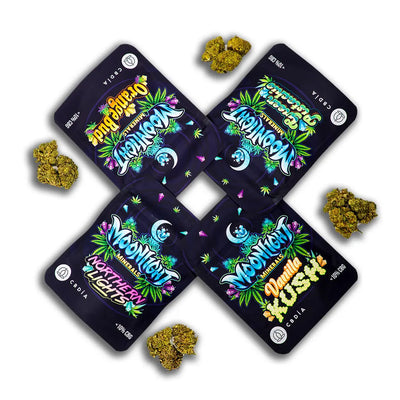
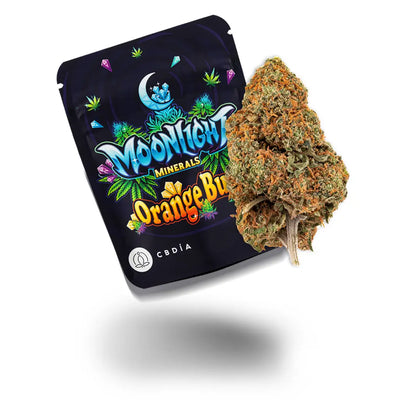
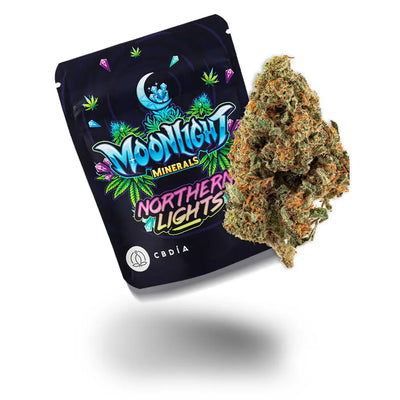
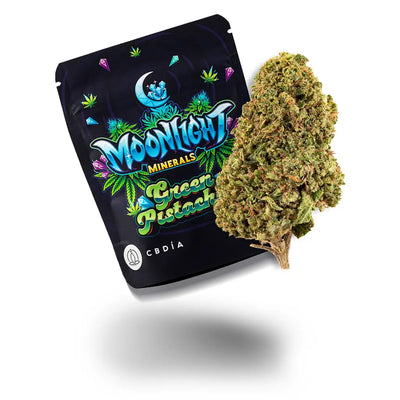
By Jona Decker: This article factually classifies CBG experiences and shows what CBG users report, without deriving healing promises, dosage information or invented experience reports from this. The focus is on CBG's level of awareness, the development of the market and the question of which product forms play a role besides CBD. Like other cannabinoids, CBG is one of the constituents of the cannabis plant and is discussed mainly in an 18+ context. The category of CBG flower experiences has also become particularly common recently, because many readers want to get an overview before classifying individual statements. Which varieties are available is shown in our CBG flowers category.
CBG Experiences: A Brief Classification
CBG experiences are frequently searched for because CBG is significantly less prominent than CBD. Awareness of CBG is growing, but many reports stem from the individual impressions of individual users. When CBG users report on their experience, it is therefore usually about personal product perception, not a robust proof of an effect.
Botanically, CBG belongs to the cannabinoids of the hemp plant. In legal products made from EU industrial hemp, the THC limit also plays a role: the THC content must be below 0.3 percent. Unlike THC, CBG is considered non-psychoactive. Nevertheless, no general statements can be derived from individual CBG experiences, neither about effect nor about the reliability of particular products.
For classification, it is therefore important that experience reports can provide orientation but do not replace a scientific evaluation. CBG users describe subjective impressions, which can vary depending on the product, expectation and individual perception.
What Is CBG and Where Does It Occur?
CBG as Cannabigerol in the Hemp Plant
CBG stands for cannabigerol and belongs to the group of cannabinoids, that is, natural plant substances from the hemp plant. CBG is thus a component of the botanical cannabinoid profile, but not synonymous with illegal substances or an intoxicant. In the hemp plant it is often present in early developmental stages as a chemical precursor; more precisely, it is considered a precursor of THC, CBD and other compounds. Other cannabinoids form in the plant's metabolism from related starting forms. CBG is therefore interesting mainly as a building block in the overall profile. Unlike THC, it is usually not classified as intoxicating or psychoactive; statements about its properties should nevertheless remain factual and free of promises of effect.
Why CBG Is Rarer in Products
CBG occurs in many plant materials only in comparatively small amounts. While CBD is often represented much more strongly in certain hemp varieties, CBG frequently makes up only a smaller share of the analysed cannabinoids. This affects how raw materials, flowers and processed products are classified: CBG-rich batches require a targeted choice of variety, suitable harvest times and precise lab analysis. This is why CBG products can be assessed and calculated differently from common CBD products. Even with CBG flowers, the name does not automatically mean that only CBG is contained; usually it is a complex profile of the hemp plant with several cannabinoids in different amounts.

How Well Known Is CBG Compared to CBD?
CBD and CBG: Differences in Perception
CBD is already familiar to many users through media reports, shops and a broad product range. CBG, whose basics are explained in the article what is CBG, stands in comparison more strongly for a specialised segment: awareness of CBG is growing but remains significantly lower than that of CBD. This is also because more easily accessible information about CBD and its classification is available. Both cannabinoids are often mentioned together, yet CBG is often only discovered once users have already engaged more intensively with hemp products. Compared to CBD, public perception is therefore narrower, more specialised and less part of everyday awareness.
Products: Flowers, Oil and Specialty Ranges
The difference between CBG and CBD also shows in availability: CBD products are established in many categories, while CBG products are usually searched for more specifically. These include CBG flowers, oil, CBG oil and other legal product forms from specialty ranges. Anyone searching for CBG flower experiences therefore often finds fewer reports than for CBD and other cannabinoids. Both areas do overlap, for example in forms such as oil, yet CBG is often perceived as a complementary niche and not as similarly widespread as CBD.
What Do Users Report About CBG Flowers?
Reading CBG Experiences Correctly
CBG experiences usually come from review platforms, forums or product reviews and reflect personal impressions. One user may describe a product as fresh and pleasant, another user pays more attention to price, packaging or transparency. Such reports can provide orientation but are not scientific proof. Many users report subjectively and out of different expectations. Statements about effect should therefore be read particularly cautiously: they say something about individual people, not about established properties of CBG.
CBG Flowers: Frequently Mentioned Product Features
In experience reports about CBG flowers, concrete product features are often at the forefront. Users describe the aroma, terpene profile, appearance and moisture of the flowers; others pay attention to a clearly stated cannabinoid profile, the batch or a lab certificate. Many users also compare packaging, scent intensity, impression of freshness and price-to-quality ratio. CBG as a component of the cannabinoid profile is often classified factually alongside CBD and THC values. For people comparing products, a clear indication of origin, analysis values and batch is helpful. Other users assess more tactile properties such as structure, residual moisture or visible processing. Positive impressions usually relate to transparency, a coherent aroma or traceable information. Nevertheless, even CBG flower experiences remain individual perceptions: many report similarly, but this does not create a universally valid proof for CBG or particular products.

What to Watch Out for When Buying CBG Flowers?
Anyone wanting to buy CBG flowers will find very different products and product presentations. For a factual classification of CBG flower experiences, traceable information is therefore more important than promises of effect: origin, analysis, the content of CBG and THC, and the question of whether all the details match the respective batch.
Lab Certificate and Analysis per Batch
A lab certificate should not only exist in general, but belong to the specific batch. Ideally it states the analysis method, measurement date and the tested values. Important are details on CBG, other cannabinoids, the terpene profile and the THC content. This makes it easier to assess whether the product description matches the lab values. Readers should also pay attention to whether limit values, possible residues and origin are presented transparently. Not all certificates are equally detailed; important information should be easy to find and understand.
Legality, EU Variety Catalogue and THC Limit
For legal orientation, reference is often made to industrial hemp varieties from the EU variety catalogue. In addition, the THC limit is relevant: in Germany, a value of at most 0.3 percent THC applies as the central reference point for many hemp products. Whether a product is legal in an individual case, however, depends on several factors and does not replace legal advice. Reputable providers do not make vague statements, but state variety, batch, analysis and THC value in a traceable manner.
Price Comparison Without Quality Promises
When buying, a sober comparison is worthwhile: price, quantities, analysis transparency and origin should be considered together. Cheap products are not automatically worse, expensive ones are not automatically better. Useful orientation is provided by information on CBG content, cannabinoid profiles and a reputable presentation without blanket quality or effect claims.
What Does the Scientific Classification Say?
Why Experience Reports Do Not Replace Studies
CBG experiences can provide clues but do not replace studies. An experience report usually describes personal impressions of a particular product or a particular situation. Such reports are subjective, uncontrolled and often shaped by expectations, accompanying factors or other cannabinoids. What is perceived as an effect cannot therefore reliably be attributed to CBG; how the CBG effect is factually classified is covered in its own article. Scientific statements require traceable methods, comparison groups and sufficient data to be able to classify effects at all.
How Does CBG Work? Limits of the Statement
There is research on the effect of CBG, but many studies come from laboratory or early preliminary stages. They can show that CBG is biologically interesting, but do not automatically show how the effect of CBG turns out in consumers' bodies. A blanket promise of effect would therefore not be robust. Even if scientific data indicate that CBG could influence certain processes, no recommendations for use or reliable expectations of effects can be derived from this.
Conclusion: Classifying CBG Factually
In conclusion, it can be said: CBG is gaining awareness but remains a cannabinoid that should be viewed soberly. CBG experiences and CBG flower experiences can help to classify products better in terms of aroma, processing or transparency, but they do not replace scientific evaluation. Anyone wanting to buy CBG should pay attention to traceable quality criteria, similarly to CBD. This way, the growing awareness of CBG can be sensibly classified, without placing promises of effect in the foreground.
This article serves exclusively for general information and does not constitute legal advice or medical advice. Legal frameworks and individual assessments can change; the information status is August 2026. Content on CBG is aimed exclusively at adult readers aged 18 and over.