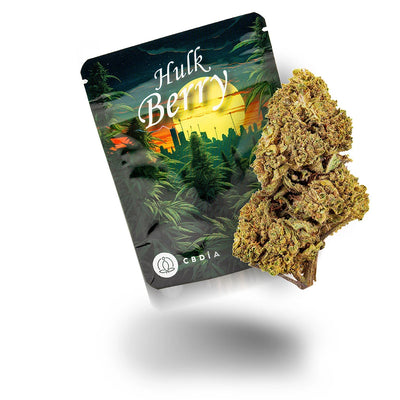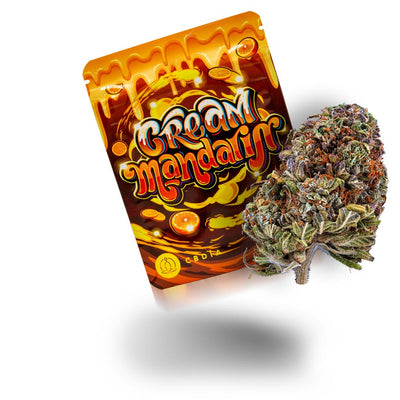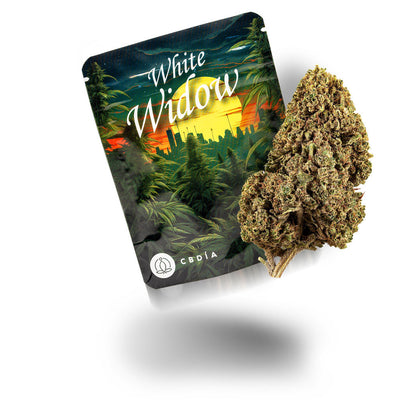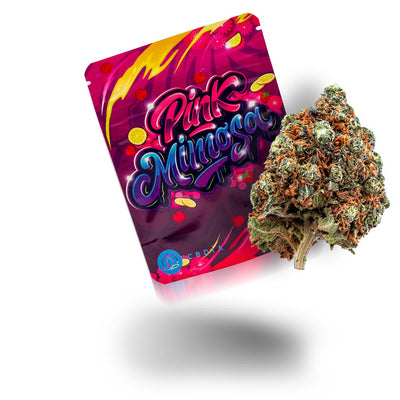



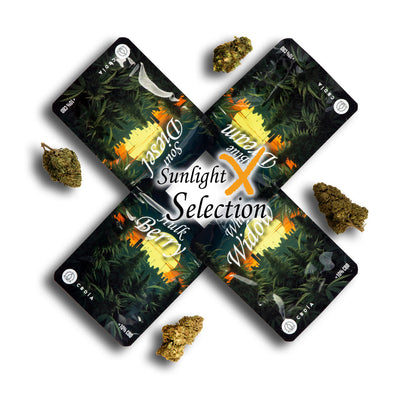
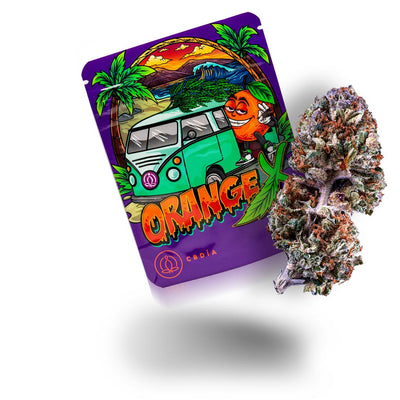
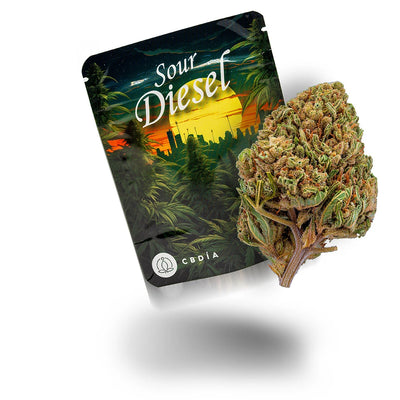
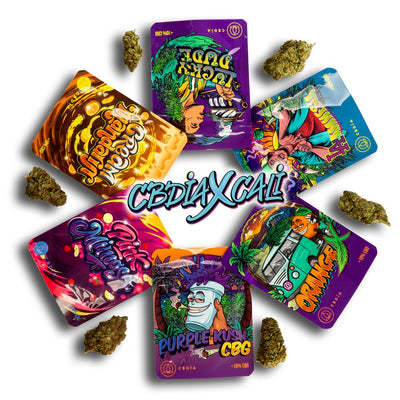
Anyone searching for "best CBD flowers" usually doesn't mean the "best" products in a blanket sense, but wants to reliably judge before buying what quality can objectively be based on. What matters, then, is whether the quality of CBD flowers can be recognised: for example through transparent information on origin, strain, CBD content, terpene profiles and lab analyses per batch. The available strains are shown in the CBD Flowers category; several strains for direct comparison are included in our CBD Sample Sets.
High-quality flowers are not defined by appearance or advertising claims alone. What matters more is traceable evidence, a clean selection of raw material, gentle processing and clear information on how the CBD flowers were produced. Reputable suppliers make information on cultivation, harvest, drying and testing accessible. CBD products should also only be sold to adults; buying and using CBD flowers is intended for people aged 18 and over.
Quick answer: how do you recognise good CBD flowers?
Anyone who wants to recognise the quality of CBD flowers shouldn't rely solely on appearance or product promises. Five verifiable criteria are especially meaningful: a current lab certificate per batch, industrial hemp from the EU variety catalogue, transparent origin with country and cultivation type, a THC limit below 0.3 percent, and a traceable cannabinoid and terpene profile. The stated THC content is especially important, so that the CBD flowers stay within the legal framework in Germany and can be classed as legal.
The CBD content should also be clearly stated, but on its own it isn't enough to judge quality. Cannabinoids and terpenes give additional pointers to the profile of the flowers, without deriving an effect or health claim from them. "Best CBD flowers" is therefore always context-dependent: for some buyers a mild aroma counts most, for others an especially transparent production process or a low THC value. Good CBD flowers can be recognised by the fact that this information is documented completely, per batch and plausibly.
Checking quality objectively
To be able to recognise the quality of CBD flowers, the focus should not be on a wide variety of strains, high values or advertising claims, but on verifiable information. High-quality CBD flowers can only really be assessed properly when a supplier assigns documents, origin and analysis data to clear product batches.
Lab certificate per batch: the most important evidence
The most important document for assessing CBD flowers is a lab certificate that refers to the specific batch. General analyses for older products or other flowers only help to a limited extent, because every harvest can differ. Make sure that date, batch number, product name and analysis values clearly match up. What matters most is the cannabinoid profile, the stated CBD value and the THC content. This makes it possible to check whether the information in the shop matches the tested product. High-quality products provide this information directly, not just as a blanket quality claim.
Origin, cultivation type and the EU variety catalogue
The origin of the flowers should also be transparently described. Reputable information names the country, the cultivation type and ideally the industrial hemp strain the hemp plant comes from. For CBD flowers, it is also relevant whether the strain is listed in the EU variety catalogue, as this plays an important role in the legal classification of cannabis raw materials. What matters is not how many strains a shop offers, but whether each strain is traceably documented. Terms such as indoor, outdoor or greenhouse are only helpful if the cultivation is explained specifically. If this information is missing, the quality remains hard to assess.
Reading the cannabinoid and terpene profile correctly
The CBD content is a product feature, but not proof of quality on its own. When you compare CBD flowers, other stated cannabinoids and terpenes should also be taken into account. They describe the natural profile of the flowers and contribute to the aroma and strain-typical properties, without deriving effect claims from them. A high CBD value looks attractive at first glance, but says little if the profile, batch or lab reference is missing. This is exactly why transparent analysis data is more important than individual peak values. This allows CBD products to be compared objectively and the quality to be assessed better.

Comparing CBD flower strains: what counts?
A meaningful comparison of CBD flower strains is not a ranking and requires being clear about what CBD flowers are. What matters is which product profile you're looking for: a milder aroma, a particular flavour, a clearly stated CBD content, or a traceable origin. The best strain is therefore not simply the one with the loudest promises, but the one whose information is best documented. How the strains differ in a direct comparison is shown in the overview of the best CBD strains.
How exactly do the strains differ?
CBD flowers differ mainly by strain, CBD content, terpenes, origin and information on cultivation, harvest and drying. This data helps you recognise the quality of CBD flowers without relying on subjective experience reports. A high CBD value alone doesn't automatically make flowers better; what matters is the overall profile. This includes lab analyses, the stated THC value, a traceable terpene profile and, ideally, specific information about the batch. The best CBD flowers are therefore those whose properties are precisely documented.
Weighing up price, evidence and selection
Prices should always be assessed in relation to evidence, origin and processing. Cheap offers can be attractive, but need the same transparency as more expensive products. Premium messaging or terms like premium CBD are only meaningful when certificates, batch analyses and origin are openly available. A reputable supplier makes it clear why certain prices arise. For your selection: the best CBD flowers are not necessarily the most expensive or the most heavily marketed, but those where quality, documentation and availability all fit together.
How is the product made? Production and drying
From CBD industrial hemp to the CBD flower
How are CBD flowers made? The starting point is industrial hemp, whose strains must be approved in the EU and are bred for low THC content. In cultivation, it's not just the strain that counts, but also where and under what conditions the hemp plant was grown. For the later assessment of CBD products, documentable information is therefore important: origin, cultivation method, harvest time and, ideally, analysis data. In CBD flower production, the flowers develop from the plant and are harvested once ripe and then processed further. So the journey from CBD industrial hemp to the CBD flower is less a single step than a chain of traceable production data.
Drying: why it matters
After harvest, the flowers still contain a lot of fresh plant moisture. CBD flower drying is meant to reduce this proportion in a controlled way, so that shape, smell and product consistency remain easier to assess. Drying that is too fast or uneven can affect the appearance, aroma and texture of the buds; storage, packaging and light protection also play a role afterwards. For CBD flowers, this is not about a blanket quality guarantee, but about the traceable stability of the product. If suppliers advertise particularly gentle drying, longer storage or special processes, this information should be transparent and plausible. For buyers, what matters is whether the CBD flowers look even, don't smell musty and don't provide contradictory information about the cannabis origin or processing.

Finding the right category when buying
Buying online: checklist before ordering
Anyone who wants to recognise the quality of CBD flowers shouldn't just look at CBD content and aroma before ordering. The best CBD shop provides a current analysis certificate for every batch, information on origin and EU industrial hemp, and a THC value below 0.3 percent. Clear profile information on strains, terpenes, cultivation and CBD flower drying is equally helpful, so that flowers become comparable. When buying online, for example if you want to buy hemp flowers, age verification from 18, traceable product data, transparent prices and factual delivery information also matter. This makes it easier to judge whether products are legal, safely documented and fit your own budget.
Premium, affordable or a wide selection?
With CBD flowers, premium doesn't automatically mean better; what matters is evidence, clean product pages and consistent batch data. Affordable CBD flowers can be interesting, but shouldn't be judged on price alone if certificates, origin or profile information are missing. Anyone looking for a wide selection compares strains by CBD content, aroma and terpene profile rather than by labels. Large categories make filtering easier, but require more scrutiny. Whether products qualify as the best CBD flowers therefore depends on weighing up transparency, the desired strain profile, budget and delivery. Sometimes less choice is easier to navigate.
Conclusion: good quality is traceable
The best CBD flowers are not recognised by big promises, but by traceable analyses, transparent origin and a suitable category. Anyone who wants to buy CBD flowers should check CBD content, THC evidence, drying and storage. This is how the quality of CBD flowers can be recognised. Whether a product is legal in Germany must always be assessed on a current basis. Not legal advice, as of August 2026. CBD and flowers: for people aged 18 and over only.