
CBD Buying Guide

The best CBD strains in comparison

Jona Decker by Jona DeckerUpdated 3 min read

Key points at a glance

  • CBDÍA selects strains based on origin, growing method and lab certificate per batch.
  • All strains come from EU hemp with no more than 0.3% THC.
  • The range is divided into the own brands Cali and Sunlight X Selection.
  • Note: all strains mentioned are part of our own range.
Die besten CBD Sorten auf einer Hanf-Plantage

At a glance

You're looking for the best CBD strains and want to know how to recognise quality. This article describes how we select strains at CBDÍA and makes clear that these are our own range. As a next step, you'll find the best-selling strains in our bestseller selection.

CBD strains in Germany: the search for the best quality

We belong to exactly that kind of company, except we didn't want to fill that promise with smoke, but with quality. Who are we, actually, you might ask? "We" are CBD enthusiasts with the goal of making CBD flowers with traceable origin easily accessible. That said, we stay honest: CBD is a plant-based product, and everything has its limits. Even so, we have made it our task to select flowers with traceable origin and a lab certificate per batch. This basic idea is what led to our collaboration with growing partners in several European countries. Which flowers convince us remains a subjective assessment that not everyone shares.

The best strains at a glance

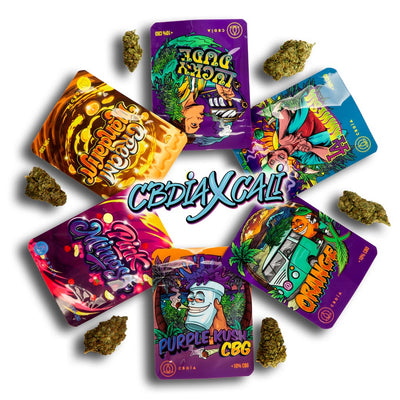
The strains that particularly convinced us when selecting the best CBD strains include:

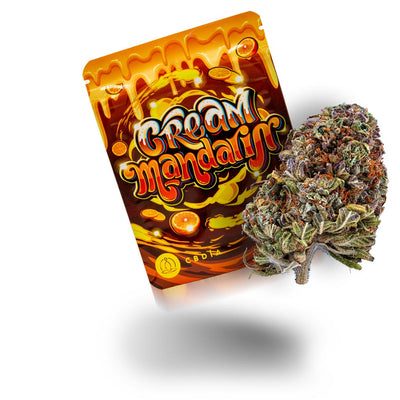
  • Cream Mandarin
  • Pink Mimosa
  • Orange X
  • Lucky Dude
  • Purple Kush
  • L.A. Amnesia

All the strains mentioned are part of the Cali Weed collection.

Which country has the best CBD strains?

So we set off in search and literally scoured the whole of Europe, trying flowers from the UK, the Netherlands, Austria, Switzerland, the Czech Republic, Germany, Italy and Spain; a large number of different strains in total, all from EU-certified hemp seeds and with no more than 0.3% THC. In our own tastings, flowers from Switzerland and Italy convinced us in particular; that is a subjective assessment, not a measurement result. On the German market, CBD flowers from other countries are only an option if they comply with the current legal position on CBD flowers.

Hemp field at dusk in purple light
The best cannabis strains require a high level of growing expertise. Since the Cannabis Act came into force, adults in Germany have been allowed to grow cannabis themselves, although only within narrow limits. We have the right cannabis seeds for growing.

High quality requires detective work

Relevant quality features of CBD strains

At times it felt like a Sisyphean task. There was always another manufacturer or wholesaler that we found in the depths of the internet, or who tried to push their flowers on us. Our heads were practically smoking from all the work. But it was also huge fun to keep testing new stock, to constantly be on the hunt for "the" strain and then actually find it. When selecting the best CBD flowers, our focus was on several factors. Among other things, how the flowers were grown was very important. That's why we pay attention to traceable origin with country and growing method, i.e. indoor, greenhouse or glasshouse. It was also decisive that the flowers were not washed to within an inch of their life just to push the CBD content sky-high, but that this was achieved biologically and naturally. That's why the CBD content of our flowers, according to the product information, is under 10 percent; the exact figures are on the lab certificate for each batch. We also placed great importance on the overall quality of the flower (appearance, bud size, resin content, crystals) and the smell, since the terpene profile shapes the scent and flavour of every strain. Here you can get 10g of CBD flowers for free.

Our selection by criteria

Years of work have gone into our range. In our various collections you'll find the strains that meet our criteria, whether more sativa or indica, within the respective price segment. All the strains in our range have different terpene profiles, which shape scent and flavour.

Who has the best CBD strains?

But since tastes and opinions famously differ, it's best to form your own impression of our strains. In the meantime, we'll keep on testing diligently. Until then, we'll be adding one or two new flowers to our shop in the near future and will let you know with an update. Looking back now, a great deal has already happened, but a great deal more is still to come.


FAQ about the best CBD strains

CBDÍA assesses CBD strains according to verifiable characteristics: origin, including country and type of cultivation, strain from the EU variety catalogue, lab certificate for each batch with cannabinoid profile and THC value below 0.3 percent, as well as aroma and processing of the flowers. Promises of effect play no role in the selection. Note: all strains named in this article come from our own range.

There is no single best ratio of CBD to THC across the board. In CBD strains made from EU industrial hemp, the THC share is legally limited to a maximum of 0.3 percent, whereas the CBD content varies considerably depending on strain, cultivation and batch. The best way to compare CBD strains is therefore via the lab certificate, which states both values for each batch.

The difference lies in the cultivation, not in the strain itself. Indoors, the plants grow under artificial light with a controlled climate; in a greenhouse or glasshouse, under natural sunlight with protection from the weather; and in outdoor cultivation, in the field. The type of cultivation influences the appearance, density and aroma of the flowers. At CBDÍA, it is stated for every CBD strain in the origin and cultivation details.

CBD strains differ in taste mainly through their terpene profile. Commonly described directions are fruity and sweet, lemony, spicy and peppery, or earthy and woody. Besides genetics, the type of cultivation, harvest time, drying and storage shape the aroma. In CBDÍA's product details you will find the described aromas for every strain, while the lab certificate states the cannabinoids for each batch.

CBD-Sorten tragen oft Namen bekannter Cannabis-Sortenfamilien wie Amnesia, Kush oder Haze, stammen aber aus Nutzhanf mit höchstens 0,3 Prozent THC. Unterscheiden lassen sie sich nach Cannabinoidschwerpunkt, Aroma, Herkunft und Anbauart (Indoor, Greenhouse, Glasshouse). Im Vergleich dieses Beitrags liegt der CBD-Gehalt der sechs Sorten laut Produktangaben unter 10 Prozent, Purple Kush hat einen Schwerpunkt auf CBG mit 8,62 Prozent. Die genauen Werte je Charge stehen im Laborzertifikat. (Stand: Oktober 2026; Link im Antworttext: /blogs/cannabis-sorte/sativa-indica-unterschied)

Der Vergleich in diesem Beitrag beruht auf den Produktangaben des eigenen Sortiments von CBDÍA, er ist kein unabhängiger Test. Wer Tests, Rankings oder Testsieger-Siegel vergleicht, sollte prüfen, wer getestet hat, nach welchen Kriterien und ob Laborzertifikate je Charge zugrunde liegen. Nachprüfbare Merkmale sind Herkunft mit Land und Anbauart, Sorte aus dem EU-Sortenkatalog, THC-Wert von höchstens 0,3 Prozent und das Cannabinoidprofil im Laborzertifikat.

Sources

These sources support the factual statements in this article.

  1. § 1 KCanG: Begriffsbestimmungen (Nummer 9 Nutzhanf), Bundesministerium der Justiz, gesetze-im-internet.de (2024)Supports that CBD flowers, as hemp, must come from certified seed of varieties in the common EU catalogue or contain no more than 0.3 percent THC.
  2. § 9 KCanG: Anforderungen an den privaten Eigenanbau, Bundesministerium der Justiz, gesetze-im-internet.de (2024)Supports that adults in Germany may privately grow up to three cannabis plants at a time at their place of residence.
  3. The phytochemical diversity of commercial Cannabis in the United States (PLoS ONE, DOI 10.1371/journal.pone.0267498), PLOS ONE (2022)Supports that cannabis strains differ chemically mainly in their cannabinoid and terpene profile, and that strain names alone reveal little about this.
About the author

Jona Decker

Jona Decker is an author and editor specialising in CBD, cannabinoids and cannabis law. He studied business administration with a specialisation in empirical economic research and has been writing about cannabidiol since 2020. He has written for the magazine CBD360 since October 2020, where he now also co-heads the editorial team. For CBDÍA, he classifies products objectively, based on the lab certificate for each batch and documented origin.