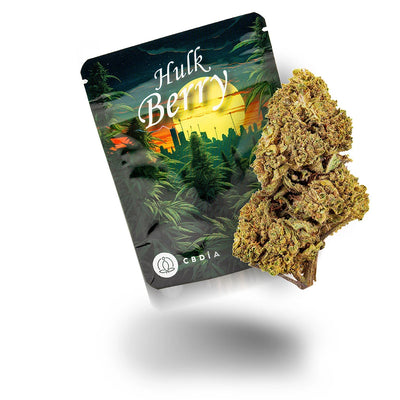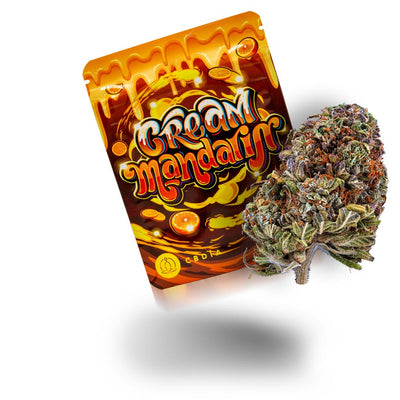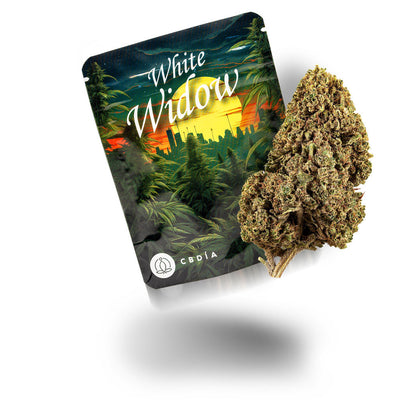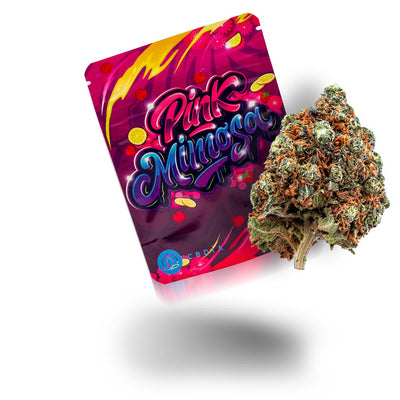






The difference between sativa and indica lies mainly in growth: sativa plants grow tall and slender, with narrow leaf fingers and a longer flowering time, while indica plants stay compact, with broad leaves and a shorter flowering period. Genetically, most of today's strains are hybrids, and genetic analyses show that the sativa and indica labels only moderately match actual ancestry. In this guide we look at cannabis from a factual perspective: growth form, origin, typical features and the classification of strains.
You'll learn why indica and sativa were historically separated, why modern cannabis genetics are often mixed, and what role hybrid cannabis plays today. We also explain how these terms can be used in a CBD context and for orientation in the CBDÍA shop.
Sativa and indica difference: the short answer
The sativa-indica difference describes mainly a historical and botanical classification of cannabis. Classically, sativa is associated with taller, slender plants, narrow leaves and origins in warmer regions. Indica, on the other hand, is considered a more compact plant with broader leaves and a shorter flowering time. So when people talk about indica and sativa, it is initially about growth form, origin and breeding lines, not a reliable prediction.
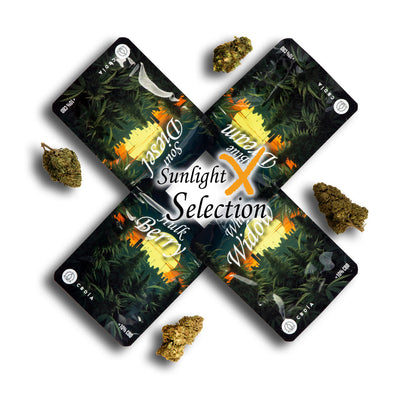
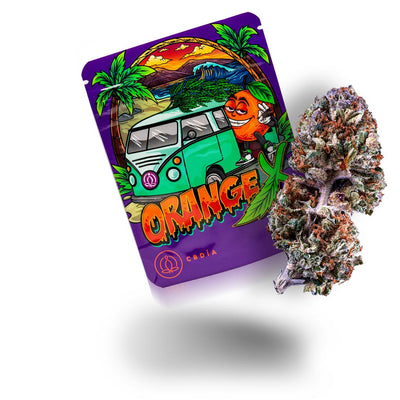
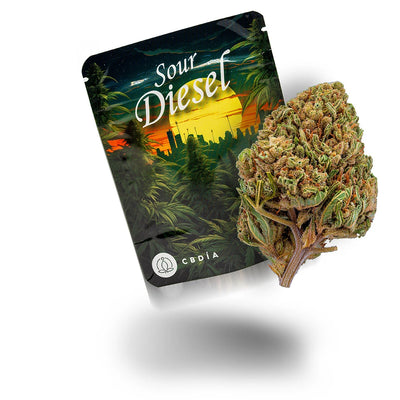
You can find strain-typical CBD varieties with a lab certificate in our CBD flower sample sets.
In everyday use, indica vs. sativa is often used to roughly classify strains. Such labels can provide orientation, but say little about the properties of a specific strain.
Important: many of today's cannabis strains are hybrids. They contain genetic portions of both indica and sativa and can rarely be clearly assigned to one side. The question "sativa or indica?" is therefore a good starting point, but it does not replace looking at the specific strain profile.
Botanical origin of the two types
Sativa and indica are historical categories within cannabis. The sativa-indica difference originally describes mainly botanical characteristics of the plant, such as growth, leaves and flowering time. However, modern strains can rarely be clearly classified as indica or sativa, because many breeding lines have mixed characteristics.
Cannabis sativa: origin and characteristics
Cannabis sativa was classically described as a rather tall-growing plant. Sativa plants often have narrower leaf fingers on the typical cannabis leaf, longer internodes and a comparatively long flowering time, as known for instance from Haze. The origin of such descriptions lies in regions with a warmer climate, from which corresponding cannabis forms originate.
Cannabis indica: origin and characteristics
Cannabis indica is historically regarded as a more compact plant with broader leaves, denser growth and often a shorter flowering time. Many indica strains have been linked to regions of origin in Central and South Asia, from which such cannabis forms originate. In the indica vs. sativa comparison, this classification mainly describes morphology. You should not derive blanket statements about modern strains from this.
History of the terms sativa and indica
The terms Cannabis sativa and Cannabis indica originate from botanical descriptions of different eras. In the 18th century, among others, Lamarck further developed the distinction by describing Cannabis indica as a separate form. Later, sativa strains and indica strains were increasingly used as practical strain categories, which simplified the sativa-indica difference.

Growth, leaves and flowering time compared
Typical characteristics of the plant
The classic sativa-indica difference shows mainly in the plant: cannabis sativa usually grows taller, with narrow leaves and a longer flowering time; cannabis indica tends to stay more compact, forms broader leaves and moves into flowering more quickly. In indica vs. sativa, these characteristics help with orientation, but modern strains can deviate significantly due to crossbreeding.
Why the distinction has its limits
In today's cannabis breeding, indica and sativa are often mixed; ruderalis can also be crossed in. What matters more are cannabinoids, terpenes and the specific profile of the strains. That's why indica vs. sativa describes different lines of origin rather than a reliable prediction of a strain's characteristics.
What are hybrids in cannabis?
Hybrids are cannabis strains that arise from crossing different lines. Many of today's cannabis strains can therefore not be clearly classified as sativa or indica, but combine characteristics of indica and sativa in varying proportions.
Hybrid cannabis: crossbreeding instead of pigeonholing
Breeders often speak of indica-dominant, sativa-dominant or balanced. This means that the family tree contains more indica, more sativa or comparable proportions. The indica-sativa classification therefore helps with rough botanical orientation, but does not replace a precise strain description.
Our strain profiles show how differently such classifications turn out in detail: Amnesia Haze Strain, Northern Lights Strain, Blue Dream Strain, Gorilla Glue Strain, Sour Diesel Strain, Biscotti Strain, Purple Skunk Strain, G13 Strain, Frozen Black Cherry and Island Sweet Skunk.
Further profiles, for example on the Purple Haze strain, are organised by strain family in our overview of cannabis strains.
Ruderalis: the third category briefly explained
Alongside sativa and indica, ruderalis is named as another cannabis form. For breeders and anyone who wants to germinate cannabis seeds, ruderalis is mainly mentioned in the autoflowering context; however, more recent genomic studies do not support the claim that the autoflowering trait actually comes from ruderalis. Here too, hybrids can arise: hybrid cannabis can combine different lines without this resulting in a simple pigeonhole.
Why the label doesn't explain everything
Many statements about indica vs. sativa relate more to aroma or expectations than to the plant's botany. For classifying a strain today, it is often more informative which chemical characteristics it shows: cannabinoid profile and terpenes, as shown on a lab certificate.
Cannabinoids and terpenes as a product profile
A transparent product profile answers more than the question of sativa or indica: it states THC, CBD, terpenes and other chemical data.

How do you recognise the right CBDÍA strains?
Whether sativa or indica: when choosing CBD strains, the label matters less than the traceable description. The sativa-indica difference can provide orientation, but in the cannabis field, origin, profile and transparency are more important than blanket expectations, and anyone who wants to get to know a strain first can request a free cannabis sample.
Quality check: lab, origin and profile
Look for a lab certificate per batch for each strain, with CBD, THC and other cannabinoid values; the THC content must be below 0.3%. Reputable information states country, origin, cultivation type and classification as EU catalogue hemp. In addition, terpenes, cannabinoid profile and terpene profile help to classify sativa strains and indica strains, without automatically drawing conclusions about effects from a single plant.
Conclusion: classifying strains correctly
The sativa-indica difference helps you understand cannabis better, both botanically and historically: sativa and indica stand for different growth forms, regions of origin and classifications. For modern strains, however, the question "sativa or indica?" is often not enough, because many products are hybrids. That's why the indica-sativa assignment is only part of the overall picture. In the CBDÍA shop you should also pay attention to category, origin, lab certificate and the respective profile. This makes it easier to judge which indica and sativa proportions are attributed to a hybrid and how reliable this information is.
Note on age, THC and classification
This article serves exclusively for the factual classification of cannabis, strains and botanical terms. Supply of the corresponding products is only permitted to adults aged 18 and over. The THC limit is a maximum of 0.3%.
Note: This article serves general information purposes and does not replace medical or legal advice. No claims of healing, effect or health, no recommendations for consumption or dosage. Supply only to adults aged 18 and over. As of: September 2026.