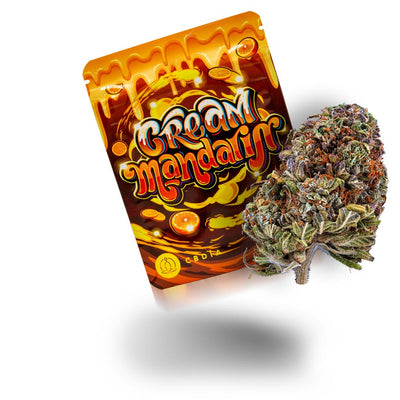








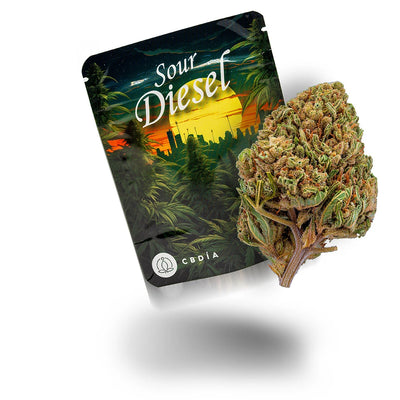

If you get into cannabis strains, you quickly come across various terms: cannabis varieties, weed strains, or in English simply “strains”. These refer to named lines of cannabis that differ in genetics, appearance, aroma and botanical characteristics. In this overview, we explain how strains are named and classified, which strain families exist, and where you can find the individual strain profiles from CBDÍA.
Cannabis Strains: How They Are Named and Classified
Cannabis strains are different breeding lines of the cannabis plant. They differ in genetic origin, botanical characteristics and sensory properties such as aroma, taste or bud structure. In everyday use, terms like weed strains or cannabis varieties are also used for this. Usually the same thing is meant: a specific line that is described, bred and passed on under one name.
Many well-known strain names are now also available as CBD flowers from EU hemp. A good starting point are the Cali strains at CBDÍA, whose names are inspired by Californian classics, each with a lab certificate per batch and THC below 0.3 percent.
Strain Meaning: Variety, Line or Cross
In the cannabis context, a strain is what is colloquially known as a variety. The meaning of strain is not always clear-cut here: a strain can be a variety, a genetic line or a cross. The terms cultivar and chemovar are also used. Breeders select plants with certain traits and try to stabilise them through crossing.
Why Strain Names Don't Mean Everything
Strain names offer orientation, but they are no guarantee of aroma or cannabinoid profile. Flowers with the same name can turn out differently depending on seed origin, cultivation, harvest time, processing and batch. Studies show that strain names and outward characteristics in hybrids do not reliably match the chemical profile. So when comparing strains, lab values, origin and cultivation details on the product help alongside the name.

Classification by Type: Hybrids, Ruderalis and Autoflowers
Besides the name, cannabis strains are roughly classified by type. The historical categories Sativa and Indica mainly describe growth form and leaf shape; what's behind these labels and where their limits lie is explained in detail in our article on the difference between Sativa and Indica.
Hybrids: When Lines Are Combined
Hybrids arise from crossing different genetic lines. Breeders combine traits from both parents, such as growth, flowering time or aroma. Terms like Sativa-dominant or Indica-dominant mainly describe lineage and growth. Most modern cannabis strains are hybrids, even if in everyday use they are often shorthand-assigned to one side.
Ruderalis and Autoflower Traits
Ruderalis plays a role in breeding mainly because of the autoflower trait: such plants start flowering independently of day length. Photoperiod strains, by contrast, only flower once the nights get longer. Crossing produces autoflower strains that combine this trait with characteristics of other lines.
How Strains Are Described
A strain profile usually describes genetics, cannabinoid profile, terpenes, bud structure, aroma and cultivation traits such as flowering time. Cannabinoid values are analytical results of a specific batch and not a fixed property of the strain name. In strain profiles, terpenes mainly explain smell and taste: they shape whether flowers are described as more fruity, spicy, earthy, herbal or citrusy.

Well-Known Strain Families: Haze, Kush, Skunk and Cookies
Strain families help you roughly classify cannabis strains. They are not a ranking, because there is no such thing as an objectively best strain. Haze is often associated with spicy and citrusy profiles and long flowering times; you can read more about this in the article on Haze strains. Kush is often linked to earthy, resinous notes and origin references to the Hindu Kush. Skunk stands for strong, spicy-sweet scent profiles, and the Cookies line for modern, sweet dessert aromas.
All Strain Profiles at CBDÍA
The Haze family includes our profile on the Amnesia Haze strain, the classification of Purple Haze with its purple flowers, and the portrait of Silver Haze. As Sativa-leaning hybrids with different roots, we describe the Blue Dream strain, Sour Diesel and the classic AK-47.
From the Kush and Indica tradition come the profiles on OG Kush, Northern Lights and the legend-shrouded G13 strain. Balanced hybrids with plenty of resin are White Widow and Gorilla Glue.
The Skunk line is represented by Purple Skunk and Island Sweet Skunk. You'll find modern dessert strains in the profiles on the Gelato strain, the Runtz strain, Biscotti and Frozen Black Cherry.
Strains as a CBD Version at CBDÍA
Strain knowledge describes cannabis lines in general terms. The CBD flowers at CBDÍA should be distinguished from this: they come from EU hemp from the EU variety catalogue, contain below 0.3 percent THC, and are sold only to adults aged 18 and over. Every product comes with a lab certificate per batch and details on origin, including country and growing method.
Conclusion: Understanding Strains Better
Cannabis strains are mainly an orientation aid: they describe the origin, genetics, aroma and typical characteristics of a plant. The meaning of strain is usually “variety” or “line”. Type labels and strain families help with rough classification but do not replace lab values and origin details.
Note: This overview describes cannabis strains botanically and aromatically. It contains no statements about effects, consumption or dosage and does not replace legal advice. Sale only to adults aged 18 and over. As of: September 2026.