






If you're searching for the Blue Dream strain, you'll come across a cannabis variety best known for its name, its origin and its typical aroma profile. This strain profile aims to classify Blue Dream factually: Where does Blue Dream come from, what genetics is it attributed to, and what flavour characteristics are commonly described?
An important distinction here: classic Blue Dream variants are known in many markets as THC-rich strain expressions. This gives you a compact overview of Blue Dream, its genetic classification and its aroma, while making clear how a CBD version differs from classic Blue Dream cannabis variants.
Blue Dream Strain: Genetics, Origin and Aroma
Blue Dream is a well-known cannabis strain that originated in California and is usually described as a sativa-dominant hybrid. The Blue Dream strain is typically linked to the parent lines Blueberry and Haze. This produces a profile that is often described as berry-sweet, slightly fruity and at the same time spicy-fresh. If you're searching for Blue Dream cannabis, you're usually looking for a strain whose classification is mainly based on genetics, aroma and strain character.
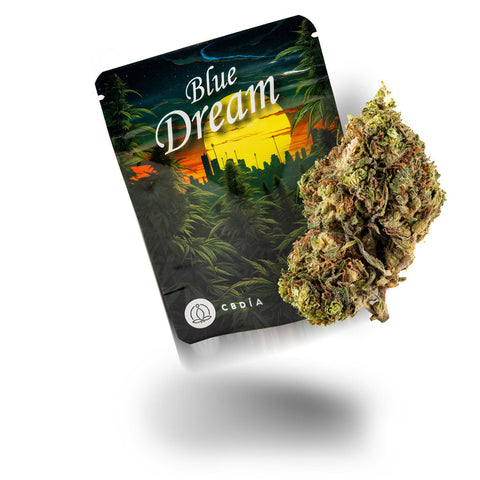
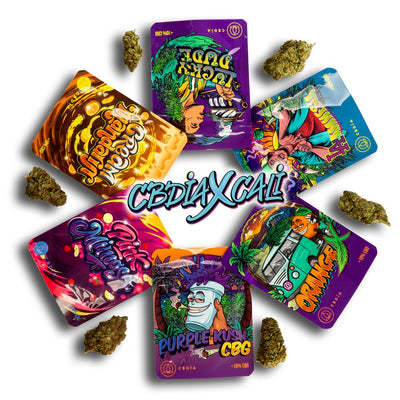
You'll find the CBD variant at CBDÍA as Blue Dream CBD flowers: EU industrial hemp, lab certificate per batch, THC below 0.3 percent.
Alongside classic THC-rich variants, there can also be Blue Dream CBD, meaning CBD-oriented products that are modelled on the aroma and genetic profile of the Blue Dream strain. In many regulated markets, such CBD products are subject to a THC limit of at most 0.3 percent; they are also intended to be sold only to adults aged 18 and over. In short: Blue Dream is above all a strain name that stands for a particular genetic origin and a recognisable aroma.
Genetics: Blueberry and Haze
The Blue Dream genetics is usually described as a cross between Blueberry and Haze. Blueberry represents the fruity, berry-like line, which often gives Blue Dream's profile its sweetish direction. Haze forms the classic counterpart: spicy, fresh and with an origin that is linked in many strain descriptions to sativa-leaning lines. The Blue Dream strain is therefore often classified as a hybrid whose character depends not only on the parent lines but also on the particular breeder.
It's important to note: there is no single, always identical reference for Blue Dream. Some sources simply name Blueberry and Haze, others point to variants such as Silver Haze or Super Silver Haze. The phenotype can also influence which traits come through more strongly. A product may therefore sometimes show more Blueberry character, while other descriptions emphasise the Haze side. When "Blue Dream cannabis" is mentioned, you should therefore understand the origin details as factual orientation, not as a fixed botanical guarantee.
Is the strain sativa or indica?
The question "Is Blue Dream sativa or indica?" is best answered neutrally: the Blue Dream strain is often described as a sativa-dominant hybrid. However, an exact classification depends on breeder, phenotype and product form. Especially with CBD variants, the weighting can seem less clear-cut, because other selection goals are prioritised. In some descriptions, Blue Dream appears more balanced, in others more clearly sativa-leaning. What matters most, therefore, are the specific details for the particular batch or variant.

What does it taste like? Aroma and flavour
The Blue Dream strain is often described with a clearly recognisable, fruity character. Typical notes are blueberry, along with a sweet, somewhat berry-like direction and an overall rounded aroma. In terms of flavour, Blue Dream can likewise show fruity accents, often complemented by fresh nuances and a slightly spicy touch. This combination makes the sensory profile multi-layered, without it having to be identical in every product.
An important term here is the terpene profile: terpenes are aromatic plant compounds that largely shape how Blue Dream cannabis smells and tastes. For this line, Haze undertones are often mentioned alongside berry notes. Haze is best understood here as an aromatic direction that can be reminiscent of herbs, spice or citrus-like freshness. This creates an aroma and a flavour that, depending on the expression, can come across as more berry-like, fresher or somewhat sharper.
Why can the profile differ from batch to batch?
Even with Blue Dream CBD, the specific profile can vary because it is a natural product. Origin, cultivation method, harvest time, drying and storage all influence the exact expression of the terpenes. This means the overall direction often remains recognisable, but individual batches can smell or taste differently. Lab certificates and transparent batch information help provide a factual assessment.
Is there a CBD variant of the strain?
Yes, Blue Dream CBD exists as a CBD-oriented interpretation of the well-known Blue Dream strain. The aim is not to automatically replicate the classic Blue Dream strain one to one, but to translate a similar aroma profile into a CBD product. If you're looking for Blue Dream but are more interested in CBD products, this variant could suit you. The focus is on typical notes associated with Blue Dream and fruity-sweet cannabis aromas, while the THC content must be legally limited.
In the CBDÍA shop, Blue Dream CBD is relevant exclusively for adults aged 18 and over. It's also important that a CBD variant of Blue Dream must comply with the statutory THC limit of 0.3 percent. This clearly distinguishes it from other cannabis strains with a stronger THC focus. This can be of interest to you if you're looking less at classic THC-dominant strains and instead want a CBD product with a familiar Blue Dream feel, and if you'd like to compare for yourself before your first purchase, you can request a free cannabis sample.
What to look out for with the CBD variant
With Blue Dream CBD, you should look for verifiable information. A lab certificate per batch shows which cannabinoids are present and whether the THC limit of 0.3 percent is being met. Precise information on origin, including country and cultivation method, is also useful. Reputable information states whether EU-catalogue industrial hemp was used. The cannabinoid and terpene profile also helps you classify the strain more accurately. Sale should be clearly restricted to people aged 18 and over.

Checking the quality of the CBD variant
If you want to classify Blue Dream CBD, you shouldn't just look at the name, aroma or appearance. What matters is whether the information about the strain is verifiable. This includes a lab certificate per batch that states the cannabinoid profile and makes the THC content transparent. For CBD products made from industrial hemp, it's also relevant whether the stated value falls within the permitted range, for example at most 0.3 percent THC, where this applies to the specific product and market.
Origin, country and cultivation method are equally important. Reputable information explains whether it is EU-catalogue industrial hemp and how the flower's profile is described. A terpene profile can additionally show which aromatic components shape the typical Blue Dream character. This explains why two products with a similar name don't automatically look, smell or taste the same. That's why, with Blue Dream as a strain name, you should always check what data is behind it. At the CBDÍA shop, this kind of information about Blue Dream CBD is meant to be verifiable, so you can assess quality through checkable data rather than claims.
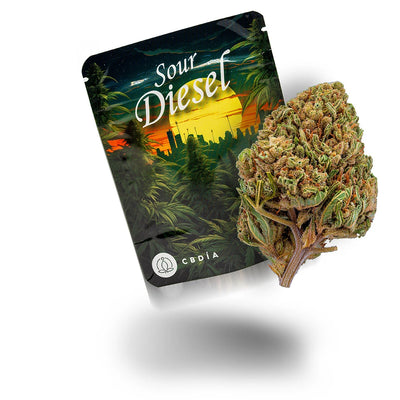
Related strain profiles: Sour Diesel Strain and Biscotti Strain.
Conclusion: classifying the strain correctly
Blue Dream is known above all for the link between Blueberry and Haze: a strain profile that's often described with a fruity-fresh aroma, berry notes and a slightly spicy nuance. If you want to classify the Blue Dream strain, the focus is therefore less on a single trait and more on the interplay of genetics, scent profile and origin. The Blue Dream strain suits readers looking for a clear overview of aroma and lineage.
As Blue Dream CBD, the profile can also be of interest to you if you're looking for a CBD variant and pay attention to transparent product information. With CBD products, look for verifiable analyses, credible information on THC content and the statutory limit of 0.3 percent. Sale is exclusively to adults aged 18 and over.
Note: This strain profile describes the variety botanically and aromatically. It contains no statements on effects, consumption or dosage. Sale only to adults aged 18 and over. As of: September 2026.