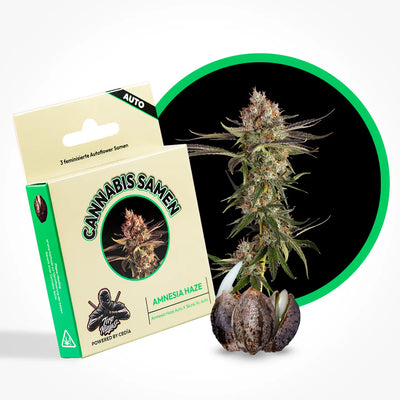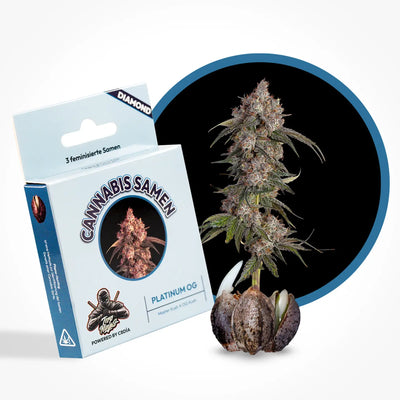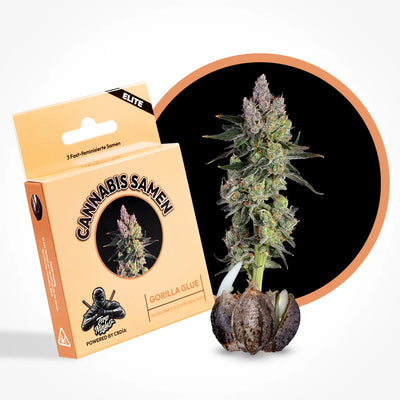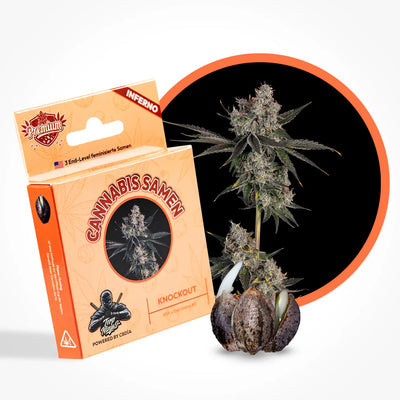



The cannabis plant (Cannabis sativa L.) is an annual plant from the hemp family and consists of a root, a stem with nodes, fingered fan leaves and flower clusters. It is mostly dioecious: female plants form resinous flowers with trichomes, male plants form pollen sacs. It is one of the oldest cultivated plants and can be identified well by its growth form, leaves and flowers. In this article you'll get to know the hemp plant step by step: from the typical cannabis leaf, through stem and roots, to the characteristics of the flowers.
The focus is on accessible plant knowledge. You'll learn how female and male plants differ, what role sugar leaves and pistils play, and how hemp can be classified as a crop plant. We'll also look at the legal distinction in Germany, especially where terms like industrial hemp, cannabis and products made from it are often mixed up.
Cannabis Plant: Structure and Life Cycle at a Glance
The cannabis plant belongs to the genus Cannabis and is often also called hemp or the hemp plant in everyday language. Botanically, Cannabis includes various forms, including Cannabis sativa; the term sativa is often used for certain growth characteristics. This refers to plants that, depending on variety, location and care, grow to different heights, branch differently, and develop leaves and flowers differently.
The life cycle begins with a seed. After germination, which our guide on germinating cannabis seeds describes step by step, vegetative growth follows, during which roots, stem and leaves develop. Later, the cannabis plant moves into flowering: female plants then develop their flower clusters, while male plants mainly produce pollen. These differences are exactly what matters if you want to understand the structure of cannabis.
A factual distinction can also be made between industrial hemp and THC-rich cannabis. Industrial hemp is grown mainly for its fibres, seeds or other raw materials and contains only small amounts of THC. Dried flowers from approved EU industrial hemp are available at CBDÍA as CBD flower with a lab certificate for each batch. THC-rich varieties, on the other hand, are subject to different legal rules. In the following sections, we'll look at how to recognise the main plant parts.
Plant Parts: Root, Stem, Leaf and Flower
The hemp plant can be well classified botanically by its basic structure: the root zone at the bottom, above it the stem, nodes and internodes, leaves and shoots to the sides, and the flower at the top or at the branch points. In cannabis, these areas are often clearly visible, so you can describe the plants better even without specialist knowledge.
Recognising the Cannabis Leaf, Stem and Roots
A typical cannabis leaf consists of several narrow leaflets that spread out fan-like from a common point. These large fan leaves sit at nodes, that is, points on the stem where side shoots can also form. An internode lies between two nodes; depending on growth, it can be just a few centimetres or considerably longer. The main stem forms the upright, sometimes tall axis of the hemp plant, while smaller side shoots grow from the leaf axils. It's exactly at these shoots that the methods gardeners use to prune cannabis plants come into play. The root zone lies in the soil and anchors the plant. Young plants first show small, simple leaf pairs before the cannabis leaf becomes larger and more heavily fingered.
Flower, Pistils and Sugar Leaves
The flower of the female hemp plant consists of densely packed calyx clusters, from which fine pistils can emerge. These pistils often look like thin threads and help to visually distinguish the flower cluster from normal shoots. Small, narrow sugar leaves sit between the calyxes; they are called this because their surface can look grainy or frosted due to resin glands. Colloquially, these visible structures are sometimes called THC crystals. Botanically, however, they are trichomes, tiny glandular hairs in which, among other things, cannabinoids and terpenes are formed. Sugar leaves are therefore not normal fan leaves, but leaves close to the flower that visually shape the structure of the bud.

The Sex of the Plant: A Brief Overview
In cannabis, plants can be male or female. Both sexes fulfil their own botanical role in the life cycle of the cannabis plant: male specimens provide pollen, while female ones form the flower and, after pollination, seeds. The first characteristics usually appear at the nodes of the shoots. Our guide on recognising male hemp plants shows in detail how to distinguish pollen sacs and pre-flowers.
Male plants mainly form pollen sacs. They usually sit at the branch points between the main stem and side shoots and initially look like small, rounded buds. When they open, they release pollen, whose role is to pollinate female flowers. Botanically, these plants are therefore important for the reproduction and genetic diversity of cannabis. Compared to female specimens, they do not develop conspicuous flower clusters with pistils, but instead invest their energy more heavily in pollen production.
You can recognise female plants by their flower clusters, which also develop at the nodes. Typical features are fine, hair-like pistils that emerge from the calyx and can capture pollen. If a female flower is pollinated, a seed can result. If pollination doesn't occur, the plant continues to form flower tissue. That's why female plants receive particular attention in everyday usage when it comes to the structure of cannabis. Rarely, hermaphroditic traits can also occur, meaning male and female structures on a single plant.
Growth Forms, Species and Strain Terminology
When cannabis is discussed, botanical terms and everyday language are often mixed up. Strictly speaking, the cannabis plant belongs to the genus Cannabis; Cannabis sativa is often named as the central species. In practice, you'll also come across terms like sativa, indica and hybrid; a separate strain guide explains the difference between sativa and indica. These describe less clearly separated species and more the growth form, lineage and typical characteristics of certain strains.
In everyday language, Cannabis sativa is often associated with tall, slender plants, longer internodes and narrower leaves. Indica, on the other hand, is considered more compact and bushy and, depending on genetics, often forms broader leaflets. Hybrids come from crosses of different lines and can combine characteristics of sativa and indica. Other strains also differ in smell, taste, flower structure, ripening time and growing characteristics.
Hemp is also part of this classification: a hemp plant can be bred as industrial hemp for fibre, seed or other purposes, while other cannabis varieties are selected more strongly for certain botanical traits. For identification in the garden or in photos, leaf shape, growth, stem structure and flower shape are the most helpful. Major differences arise less from the name of a strain than from genetics, environmental conditions and care.

What the Plant Doesn't Like: Site Stress
Soil, Light and Water as Site Factors
A cannabis plant reacts sensitively to site stress. Unsuitable soil, compacted ground or a pot where moisture stays permanently can put strain on the roots. Our guide on which soil for cannabis shows which substrates are suitable. Light is also a key botanical factor: too little slows growth, while too intense light can stress small leaves and young plants; a separate guide describes what matters most with cannabis seedlings. Water is likewise ambivalent, because both waterlogging and drought stress have unfavourable effects. In cultivation, people therefore often talk about a balanced environment, without this turning into a fixed instruction. An optimal location always depends on the strain, growth stage and surroundings; during the cannabis flowering stage, the requirements change once again. Above all, cannabis plants dislike extremes, preferring stable conditions over several weeks.
Fertiliser as a Nutrient Factor
Fertiliser is a general factor in nutrient supply for cannabis plants, but it is no guarantee of healthy growth. Plants need nitrogen, phosphorus, potassium and trace elements in a balanced ratio; an imbalance can show up, depending on the growth stage, as discolouration, stunted development or minor damage. Even specialised cannabis fertiliser remains, botanically speaking, just one nutrient source. Too much fertiliser can be just as problematic as too little, because it can put strain on the roots. For this overview, it's important to know: when growing, you should focus on the principle of nutrient balance, not on rigid amounts or schedules. An overview on cannabis cultivation summarises how the individual steps of home growing fit together.
Legally Distinguishing Industrial Hemp and THC Hemp
Distinguishing Industrial Hemp and CBD Products
Legally, industrial hemp must be distinguished from a cannabis plant grown for private home cultivation. A hemp plant used for CBD products comes from approved EU industrial hemp varieties listed in the EU variety catalogue. CBDÍA products come from EU industrial hemp with a THC content of under 0.3 percent. This allows a clearer distinction in Germany between hemp and cannabis, which can be subject to different rules. At CBDÍA, every batch comes with a lab certificate as well as information on country of origin and cultivation type. Products are sold only to those aged 18 and over.
The KCanG Briefly Explained
Since 1 April 2024, the German Consumer Cannabis Act (KCanG) has allowed adults to privately grow no more than three cannabis plants at a time at their place of residence or habitual abode. Cannabis from home cultivation may not be passed on to third parties. This private regulation is clearly separate from EU industrial hemp and products made from it.
From Plant to Product: Recognising Transparency
When moving from the botany of the hemp plant to hemp products, traceability is what matters most. Transparent products show which cannabis plant, or which industrial hemp, they come from and how the raw materials were grown. This includes origin information with country and cultivation type. In Germany, it is also relevant whether the plants come from approved varieties in the EU variety catalogue.
At CBDÍA, every batch comes with a lab certificate showing the cannabinoid profile, CBD content and THC content. This lets you check what information is available without having to rely on general claims. You can also check whether all the information on origin and processing is understandable. As a rule: the more precisely a supplier explains where the hemp comes from, and the more verifiable data it provides per batch, the more easily you can assess products before deciding to buy them.
Conclusion: Structure, Sex and Law in Context
When you look at the cannabis plant botanically, you quickly see how the root, stem, cannabis leaf and flower work together. This helps you classify a hemp plant more confidently and understand typical characteristics of cannabis without reducing everything to active compounds. It's also important to distinguish between male and female plants, because they have different consequences for pollination and flower formation and help determine when gardeners harvest cannabis.
The legal distinction is equally part of this: in Germany, industrial hemp and cannabis are assessed not only botanically but also via threshold values and intended use. The cannabis plant is therefore a versatile plant in which structure, sex and legal context should be considered together. If you want to dive deeper, CBDÍA offers suitable guides as well as transparently documented products around hemp and CBD.
Legal notice: Home cultivation of cannabis is permitted in Germany under § 9 KCanG for adults with up to three plants at their place of residence; passing it on is prohibited. Not legal advice, status: September 2026.