



When observing hemp plants, sex is one of the most important botanical clues: a male hemp plant forms different pre-flowers than a female cannabis plant, and a hemp hermaphrodite can also appear within a batch. Anyone wanting to distinguish male, female and hermaphroditic plants should above all watch for early characteristics at the nodes, that is, where side shoots meet the main stem.
This guide is about reliably classifying typical signs: pollen sacs, pistils, flower buds and possible consequences of pollination. We'll also look at the role played by feminised seeds, regular seeds and autoflower seeds, and why female flowers are the ones that matter commercially. The focus is on accessible plant knowledge so you can objectively identify and classify hemp plants.
Recognising Male Hemp Plants: Pollen Sacs and Pre-Flowers
You can usually recognise a male hemp plant by the fact that it does not form actual flowers with white hairs, but instead develops small, round pollen sacs at the nodes. These usually sit where side shoots meet the main stem. Male plants often look inconspicuous at first, but the pollen sacs become more visible over time and can later release pollen.
A female cannabis plant, by contrast, tends to show early flower buds from which fine hairs, that is, pistils, grow out. Female plants form the typical flowers, while male plants are mainly relevant for pollination. So the most important difference lies not in the general growth form but in the reproductive organs: male hemp plants carry pollen sacs, female plants show pistils and flower buds.
A hemp hermaphrodite can carry both characteristics at the same time. This means both female buds and male structures can appear on a single plant. It's important not to classify young plants too early, because during the seedling stage the sex usually isn't reliably visible yet. A reliable assessment only becomes possible once pre-flowers appear or the early flowering stage begins. So observe carefully over several days before you definitively determine male hemp plants, female plants or hermaphroditic plants.
Determining Male Hemp Plants at the Nodes
Male hemp plants usually show their sex at the branch points between the main stem and side shoots. Pre-flowers form there, which look different in male cannabis plants than in female cannabis plants: instead of fine white hairs, small, round structures tend to develop, from which pollen sacs can later form.
Distinguishing Pollen Sacs from Leaf Buds
You'll find the main characteristics of a male hemp plant at the nodes, that is, the growth points where side shoots and leaves grow out of the main stem. Male pre-flowers often look there like small, round balls or nubs on a short stalk. Pollen sacs develop from these and can later release pollen. It's important to distinguish them from normal leaf buds: young shoots, stipules or new branch points can look similar at first. So don't determine male hemp plants too early; instead, watch whether the structures clearly develop into several closed little sacs and show no white hairs.
Why Male Plants Are Often Removed
Male plants are removed in many growing contexts when pollination of female plants is not desired. The reason is botanical: if pollen reaches female flowers, they can develop seeds instead of continuing to grow seedless. That's why male plants are often identified and removed early, as soon as the sex characteristics are reliably visible. With regular seeds, this check is especially relevant, because both male and female hemp plants can result.

Recognising Female Cannabis Plants: Pistils and Flower Buds
You can recognise female plants mainly by the small flower buds at the nodes, that is, where side shoots meet the main stem. In cannabis plants, no round pollen sacs form there, but rather drop-shaped calyx clusters. Fine, usually light-coloured hairs can grow out of these. These are exactly the characteristics considered typical signs of female plants. The difference from male plants becomes clear over time: while male plants form spherical structures, female plants develop more compact flowers. Especially with young plants, however, you should judge carefully, because early buds can still look very similar. Only once the female characteristics are more clearly developed can a plant be classified as female with more confidence. An overview on the cannabis plant shows how calyx, pistils and sugar leaves together form the flower cluster.
Correctly Classifying Flowers, Hairs and Pre-Flowers
The most important phase for sex determination is the pre-flower stage. A female cannabis plant often initially shows only tiny buds that are easily overlooked or mistaken for new shoots. Small calyx shapes are typical, from which fine hairs can later emerge. These hairs are a helpful sign, but they're not always immediately visible. That's why patience is important: the sex can usually only be determined reliably once several spots on the plant show similar characteristics. Individual flowers or buds are often not enough for a reliable assessment. So observe female plants over several days before making a decision.
When the Sex of the Hemp Plant Becomes Visible
In cannabis, sex does not become visible at the same time for every plant. During the vegetative stage, plants mainly grow taller at first and develop leaf mass and root structure; clear sex characteristics are often still absent. Nothing of this is visible in young plants yet; our guide on caring for cannabis seedlings explains what matters in the first weeks. The first assessment is usually possible at the pre-flower stage, when small structures develop at the nodes. At the latest with the start of the cannabis flowering stage, the differences become clearer. With regular seeds, the sex can be male or female, while feminised seeds predominantly produce female plants.
How quickly the first characteristics develop doesn't depend on age alone. Genetic lines and strains also differ in how early plants respond and how clearly the pre-flower appears. So it's normal for one plant to already show small buds while other plants from the same batch still look inconspicuous. For growing, this means: observation takes some patience, because conclusions drawn too early can easily be misleading.
Why Some Specimens Show Characteristics Earlier
Some specimens show characteristics earlier because their genetic makeup favours faster maturity. Other specimens remain in a seemingly neutral stage for longer, even though they are growing healthily. There are also strain-related differences: certain strains form pre-flowers early and noticeably, others only with a delay. Age, general vigour and environmental conditions can also influence when visible traits appear. What matters is combining several observations over a few days rather than immediately treating a single early detail as a reliable sign.

Hemp Hermaphrodites: Causes and Signs
A hemp hermaphrodite is a cannabis plant that shows both male and female sex characteristics at the same time. This matters for growing, because such plants can produce pollen. If this pollen reaches female plants, unwanted pollination can occur. Instead of forming flowers exclusively, the pollinated plants can then produce seeds. Common triggers are genetic predisposition or unfavourable conditions; some lines are more sensitive to this than others.
When Male and Female Characteristics Appear Together
A plant is called a hemp hermaphrodite when, for example, pollen sacs and female flower buds can be seen on it at the same time. Sometimes only individual male structures appear on otherwise female plants. This is exactly what makes identification difficult: in an early stage, characteristics can still be small, hidden or easily confused. So take your time and look more than once before classifying plants. What matters is whether male and female, or female and male, signs really do appear together.
The main risk lies in pollination: even a few male structures can release pollen and affect neighbouring female plants. A hemp hermaphrodite is therefore not a separate "third sex", but a plant with mixed characteristics. For assessment, a calm check of the nodes and flower areas is usually enough.
Regular and Feminised Seeds: Influence on Sex
The type of seed plays an important role in which sex your cannabis plants later show. Regular seeds result from classic pollination and can produce male or female plants. That's why, with regular seeds, you need to check more closely whether pollen sacs or female pre-flowers are forming.
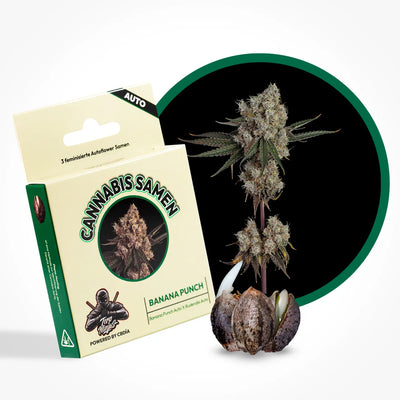
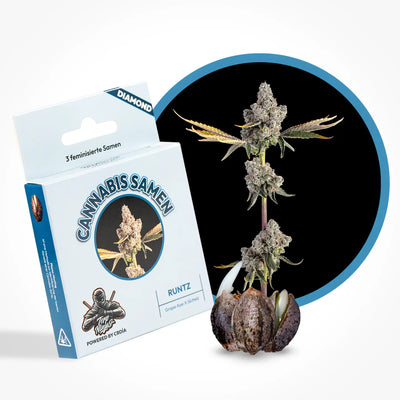
Feminised seeds are produced through targeted breeding so that they are highly likely to produce female plants. Even so, feminised seeds are no guarantee: stress, light problems or an unstable genetic line can encourage hermaphroditic traits.
Autoflower seeds mainly influence the start of flowering, not automatically the sex. When breeding new strains, breeders select plants based on stability, growth and flower formation. So when developing new strains, it's not only growth form that matters, but also how reliably the breeding avoids male, female or hermaphroditic traits.
Conclusion: Confidently Identifying Male Hemp Plants
You can recognise a male hemp plant mainly by pollen sacs, and a female cannabis plant by fine hairs and forming flowers. Hemp hermaphrodites show mixed characteristics, so you should not judge hemp plants too early and should observe the plants over several days. This makes it possible to identify male plants, female plants and hermaphrodites more reliably. You'll find further basics on germination, growth and flowering in CBDÍA's growing guides.
Legal notice: Home cultivation of cannabis is permitted in Germany under § 9 KCanG for adults with up to three plants at their place of residence; passing it on is prohibited. Not legal advice, status: September 2026.