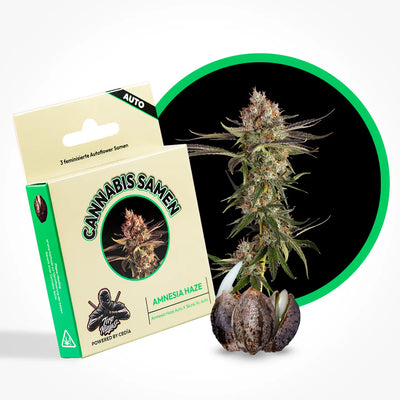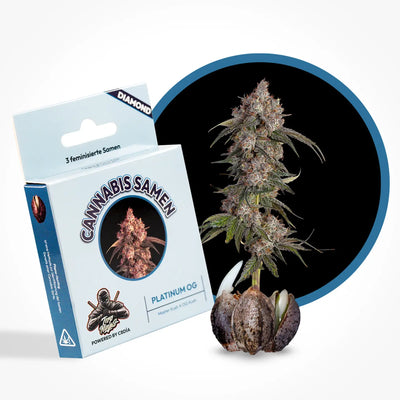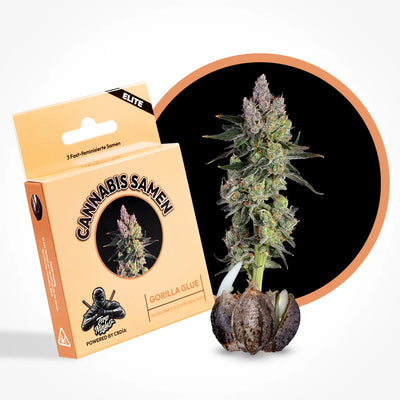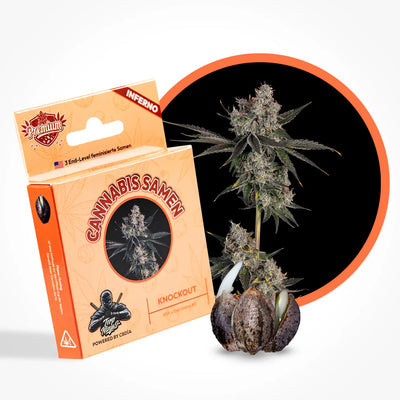






The cannabis vegetative stage largely determines how stably a young plant develops before it moves into flowering. Duration, water, nutrients and the right lighting for cannabis are directly interlinked: too little light slows growth, too much stress can weaken the plant. That's why it's worth looking at the vegetative stage not in isolation, but as an interplay of care, environment and timing.
In this guide, you'll learn what matters when your cannabis plant needs light, water and nutrients in a balanced ratio.
Cannabis Vegetative Stage: How Long It Lasts
The cannabis vegetative stage does not last the same length for every plant. The duration of the vegetative stage is often around three to eight weeks, depending on the seed, strain, growing goal and conditions. Some growers keep photoperiod plants in the vegetative stage for longer, because flowering only begins once the light cycle is switched. Autoflower strains, by contrast, usually move on to the next stage on their own after just a few weeks.
How long the vegetative stage should sensibly last also depends on how vigorously the plant is growing. Root space, temperature, water and nutrients clearly influence growth; there are specially formulated nutrient solutions for this stage, such as Jadeite growth fertiliser. If the plant has too little space in the pot or is stressed, its development can slow down. The question of how the cannabis plant receives light also plays a central role: a stable light cycle supports even growth, while strong fluctuations can affect the length of the stage.
There is therefore no blanket answer to "how long?". What matters is whether the plant looks healthy, forms strong shoots and has developed enough structure before it moves into flowering.
The Vegetative Stage: What Happens During Growth
The vegetative stage is the period in which the plant mainly builds structure: roots, stem, leaves and first branches, that is, the basic building blocks in the structure of the cannabis plant. It follows germination and the seedling stage and ends once flowering is triggered. Its duration therefore cannot be measured in weeks alone. What matters more is whether the plant has developed a stable size, strong roots and healthy leaves. Depending on strain, pot size and environment, the vegetative stage can last a few to several weeks.
From Germination to the First Few Weeks
The cannabis vegetative stage doesn't start directly with a large plant. Germination begins from the seed; the seedling then shows its first cotyledons and, shortly after, its first true leaves. Our guide on caring for cannabis seedlings explains how to look after seedlings during this time. In the first two weeks, growth often looks slow because the small plant is mainly forming roots. Once this foundation is in place, stronger vegetative development begins: the plant stretches, forms more leaf mass and can develop new side shoots. These transitions are fluid; not every seed develops at the same pace.
How Many Centimetres Does Hemp Grow per Day?
Hemp can grow visibly in a single day, but a fixed number of centimetres would be misleading. Some strains gain height faster, others stay more compact. The better light, root space, temperature and water balance work together, the more evenly the plant grows. Instead, pay attention to short distances between leaf nodes, a strong colour and upright leaves. These tell you more reliably whether your cannabis plant is making good use of light and whether growth matches the current stage.

Light Cycle During the Vegetative Stage
During the vegetative stage, light is the most important pacemaker for growth. Photoperiod plants remain in vegetative development under long light phases, while switching to shorter light phases later triggers the formation of flower clusters. Growers often use 18 hours of light and 6 hours of darkness, but 16 or 20 hours of light can also work depending on the setup. What matters is a stable daily rhythm, a reliable dark phase, and a light cycle that suits the plant, the lamp and the environment.
Coordinating Light, Distance and Air Movement
Ensuring the right supply when lighting cannabis plants means more than just switching on a lamp. Distance, heat build-up, air movement and temperature all need to work together. Watch how the plant reacts in its environment: if the leaves sit relaxed, growth stays compact, and the shoots develop evenly, that's a good sign. If the plant stretches strongly, more light or a shorter distance may be needed. If it looks stressed, more distance, better air movement or adjusted output often helps. This way, your cannabis plant gets light without being put under unnecessary strain.
Cannabis: Recognising Too Much or Too Little Light
Whether cannabis is receiving too much light cannot be reliably determined from a single sign. Clues can include upturned or curled leaves, pale tips and slowed growth. Measurements on cannabis also show that very high light intensity combined with high temperatures tends to slow down photosynthesis. Too little light, by contrast, often shows up as strong stretching, thin stems and pale, weak development. Always check several causes: distance, lamp output, temperature, water and nutrients all affect the plant at the same time. If something happens, don't change everything at once; instead, observe the reaction over a few days. This helps you find out more reliably whether your cannabis plant should get less or more intense light.
Water, Nutrients and Climate During Growth
In the cannabis vegetative stage, healthy development is not decided by a single factor but by the interplay of water, nutrients, temperature, humidity and root space. Observe your grow regularly: every plant reacts somewhat differently, and small changes often reveal early on whether everything is in balance.
Watering: Giving Water Without Overdoing It
With watering, it helps not to water on a rigid schedule, but to check substrate moisture, pot weight and leaf appearance. Too much water displaces air in the root zone and can stress the roots; too little water makes the plant look limp and slows growth. Healthy watering means: evenly moist, but not permanently soaked. Lift your pot regularly, because the lighter it gets, the more easily you can spot the right time to water.
Keeping Temperature and Humidity Stable
A stable environment makes the vegetative stage easier for the plant. Temperature and humidity together influence how well leaves transpire and how actively the plant can grow. If temperature fluctuates strongly, or humidity is permanently too low or too high, unnecessary stress results. So pay attention to temperature, humidity and gentle air movement, without blasting the plant directly with strong airflow. This keeps conditions predictable and helps small problems stand out sooner.
Correctly Assessing Nutrients
You should assess nutrients carefully at this stage. Small, young plants generally need fewer nutrients than strong plants with lots of leaves and active growth. The right assessment comes from observation: pale leaves, very dark green colouring, burnt tips or stalled growth can be signs of under- or over-feeding. Strong plants can tolerate more, depending on the substrate, but not every reaction requires immediate intervention.

Recognising the End of the Vegetative Stage
The cannabis vegetative stage doesn't end on a fixed calendar day, but when the plant transitions into flowering. In photoperiod plants, this switch usually begins with a change in the light cycle; in autoflower strains, it follows the genetic rhythm. Early signs include pre-flowering, changed internodes and the stretch, during which the plant often still gains considerable height after flowering begins. Later, visible flower buds form, and the vegetative stage is practically complete. The path to harvest then continues to depend on strain, health and care.
Comparing Photoperiod Strains and Autoflowers
Photoperiod strains respond strongly to how the cannabis plant receives light: only the right change in the light cycle triggers flowering. This lets you control the size and duration of the vegetative stage more precisely. Autoflower strains work differently. An autoflower usually starts flowering after a few weeks, even without any change in lighting. That's why autoflower plants often stay more compact, while photoperiod strains can be built up for longer before flowering.
Flowers Only Grow During the Flowering Stage
Flowers don't visibly develop during the vegetative stage but only after the switch. Our guide on the cannabis flowering stage describes how the plant changes week by week from then on.
Common Mistakes in Vegetative Growth
Common mistakes during the vegetative stage often come from impatience. A vegetative stage that's too short, or switching to flowering too early, can cause the plant to grow less stably later on. Conversely, an unnecessarily long stage over many weeks achieves little if root space, water and nutrients aren't right.
Mistakes also happen with cannabis lighting: if cannabis gets too much light, stress symptoms appear; if the light is too weak, the plant stretches heavily. Growers should therefore not just look at wattage, but at distance, duration and the plant's reaction.
Incorrect watering is another mistake: many growers water again too soon or leave the substrate permanently soaked. Too little root space and unsuitable training measures are similarly critical. Topping and other methods of pruning cannabis plants are also better suited to experienced growers and should not be carried out too early in the vegetative stage.
Conclusion: How to Get the Vegetative Stage Right
The cannabis vegetative stage has no fixed duration: depending on strain, environment and care, it can last a few weeks or considerably longer. What matters is that light, water, nutrients and pot size all fit together. With cannabis lighting, it's not just the cycle that counts, but also how the plant reacts. Observe how much light your cannabis plant needs, and only trigger flowering once the plant looks stable. You'll find further basics in CBDÍA's growing guides.
Legal notice: Home cultivation of cannabis is permitted in Germany under § 9 KCanG for adults with up to three plants at their place of residence; passing it on is prohibited. Not legal advice, status: September 2026.