




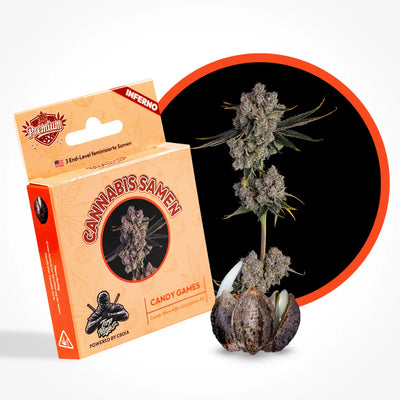
The cannabis flowering stage refers to the phase in which a cannabis plant forms and ripens flowers. The cannabis flower visibly changes during this time: from early formations, flower clusters develop while the plant increasingly concentrates its energy on flowering. How many weeks the flowering stage lasts depends on strain, genetics, light, temperature and other conditions. That's why the duration and signs of ripeness in cannabis can only be classified as a guide, not as a fixed rule.
This article explains objectively what happens during flowering and which features are often described. When cannabis is mentioned here in a legal product context, it refers exclusively to legal hemp quality with a maximum of 0.3% THC. Supply of the corresponding products is made only to adults aged 18 and over.
Cannabis flowering stage: duration in weeks
For many strains, the cannabis flowering stage roughly lasts about seven to twelve weeks. However, this range is only a guide: some plants seem ripe earlier, other plants need longer until flowering is complete. That's why information on the duration of the flowering stage should never be understood as a fixed calendar plan.
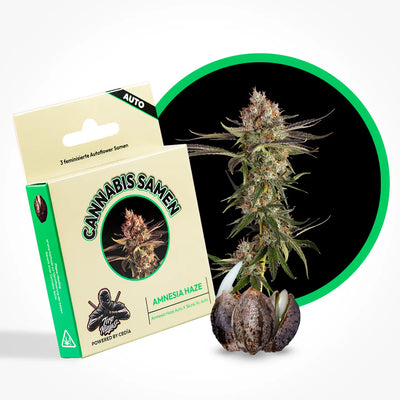
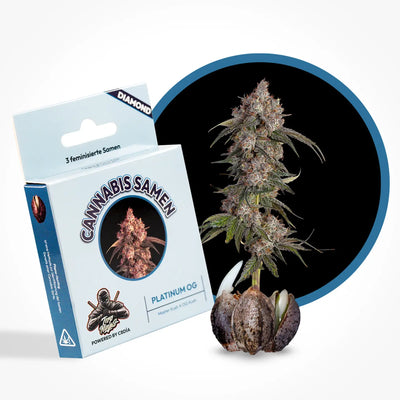
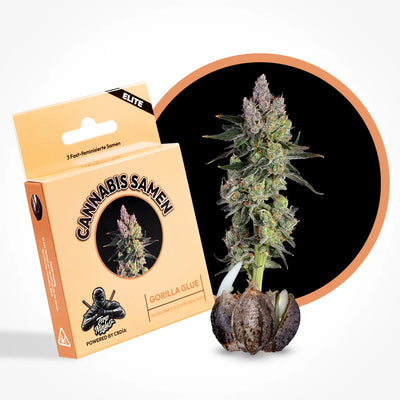
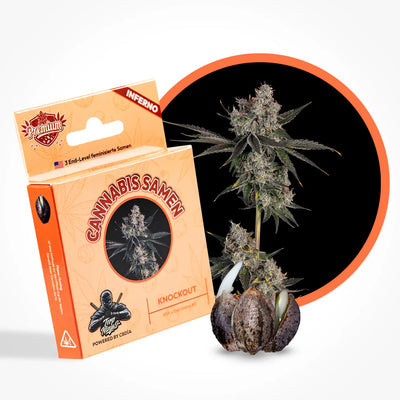
You can find strains with documented flowering time among our cannabis seeds, and suitable nutrients under Cannabis Fertiliser.
When it comes to the flowering stage of cannabis in weeks, genetics and growth type mainly play a role. Indica-dominant strains are often attributed a shorter flowering stage, sativa-dominant plants a longer one; because these labels only roughly reflect the genetics, the specific strain decides in each individual case. Hybrids usually fall in between. Even within a single strain, the plant can react differently, because location, vitality and general conditions influence the course of flowering.
The first visible changes mark the beginning of flowering, but not automatically an exactly calculable endpoint. During flowering, the flowers develop step by step; at the same time, smell, structure and signs of ripeness change. Factors such as light conditions, nutrient supply or humidity can cause the plant to ripen more slowly or more evenly.
For a starting point, it therefore makes sense to see the weekly figures as a rough framework: many plants fall in the range of eight to ten weeks, some more around six to eight weeks, others at ten to twelve weeks or longer. What matters is not just the number of weeks, but the actual state of ripeness at the end of the flowering stage.
The flowering stage of cannabis week by week
Weeks 1 to 3: start of flowering and stretch
In the first weeks, the plant visibly changes: coming out of vegetative growth, many plants start to direct their energy more strongly towards flowering. Typical is the so-called stretch, in which shoots and internodes stretch once more. The first small flower formations become recognisable, often with fine white hairs. For classifying the flowering stage of cannabis over the weeks, this early phase is important, because it is where the basis for the later structure is formed. In a flowering cannabis plant, the plants usually still look quite green and strongly growing, while the first signs of flowering begin.
Weeks 4 to 6: buds, leaves and ripening
In the middle of cannabis flowering, the buds become more distinct and dense. The plants now seem less focused on height growth; instead, the flower clusters develop more visibly along the shoots. Leaves near the flower can look different from large fan leaves, because the plant increasingly concentrates its resources on the buds. Looking at the flowering stage of cannabis over the weeks, this is the section in which structure, scent and resin coverage usually stand out more. Ripening becomes more recognisable, even though the plants still look visually active and lively. Flowering plants now often show a clearer separation between leaf mass and flower areas.
Late weeks: signs of ripeness before harvest
In the late weeks of the cannabis flowering stage, growth usually slows down noticeably. The flower looks more compact, the buds appear more mature, and the last visible changes relate more to structure, colour and resin than new size. Trichomes are often examined more closely, because they can give general indications of ripening; discoloured hairs and diminishing freshness of individual leaves also count among possible signs of ripeness. The duration of the flowering stage differs depending on genetics and conditions, which is why the late weeks don't look the same for every plant. Before the cannabis harvest, it is therefore less about a fixed date than about the overall picture of the plant and its trichomes.

How do you recognise flowering cannabis plants?
Recognising pre-flowering and first signs
You usually first recognise the beginning of a cannabis plant's flowering at the nodes, meaning the branching points between the main shoot and side shoots. Small pre-flowers can form there, from which fine, light-coloured flower hairs protrude. A separate guide shows how to tell a male hemp plant apart from a female one. These signs show that the plant is moving into the flowering stage. Not every change is immediately obvious: growth form, stretching and closer spacing of new shoots can also be signs of flowering plants.
Correctly assessing trichomes and ripening
During cannabis flowering, trichomes increasingly develop on flower clusters and adjacent plant parts. They look like tiny, shiny dots or hairs and change their appearance in the course of ripening. For reliable observation, a magnifying glass is helpful, because trichomes are easily misjudged with the naked eye. What matters is that they serve as a visual indicator of the flower's ripeness, without drawing blanket conclusions about quality or effect from this.
Distinguishing leaves, buds and harvest signs
In the late cannabis flowering stage, you should look at leaves, buds and general harvest signs separately. Flowering buds become denser, while individual leaves can lighten or discolour. Such changes don't always affect the same area of the plant and don't automatically mean that harvest is imminent. What matters is the overall picture: structure of the flower, condition of the plants, development of the flower hairs and stable conditions such as suitable humidity at the end of the flowering stage.
Which factors shape flowering?
Assessing light, temperature and humidity
How evenly plants develop depends heavily on their environment. Light influences how much energy the plant can use for growth and flowering; the leaf canopy also plays a role in how well light is distributed. Temperature affects metabolism and evaporation, while humidity determines how easily plants release water. Fluctuating temperatures or highly variable humidity can cause the duration of the flowering stage to vary between individual plants, even if they look similar on the outside.
Understanding nutrients, water and stress
During the cannabis flowering stage, your plants' needs change: nutrients are used differently than during vegetative growth after the seedling phase, with nitrogen remaining an important nutrient even during flowering. Water remains important, but too much or too little water can disrupt nutrient uptake. Stress from repotting, damage, pests or unstable conditions can burden the plant and delay flowering. What matters is avoiding stress as much as possible before it visibly affects the leaf canopy, flowering and ripeness.
Comparing strains and conditions
Not every cannabis flowering follows the same schedule. Some strains naturally need more weeks, others ripen earlier because their genetics are laid out differently. Add to this the conditions in your environment: light distribution, temperature, humidity, water, the soil for cannabis and nutrients all influence how stably the plants go through this phase. That's why the duration of the flowering stage is always a combination of predisposition and external conditions. For assessing flowering, it helps to observe your plants regularly instead of only relying on calendar figures.

Which common mistakes should you avoid?
Avoiding overly rigid weekly schedules
A common mistake is to understand the flowering stage of cannabis in weeks as a fixed schedule. Weekly figures help with rough classification, but they don't replace observing your plants. Some strains develop faster right from the germination of cannabis seeds, others need extra days. Pay attention to the overall condition of the plants instead of overrating individual calendar points.
Not overlooking mould and stress
In the late phase of cannabis flowering, problems can easily be overlooked because the flower looks visually dense. Mould is particularly tricky here: not every discolouration is mould, but you should look closely at unclear spots. Stress from unnecessary removal, frequent handling or constant intervention can also burden flowering plants. Pay attention to the leaf canopy, humidity and changes before jumping to conclusions.
Not assessing harvest signs too hastily
With the cannabis flowering stage, you shouldn't derive harvest signs from a single indication. Discoloured hairs, wilting leaves or a changed smell don't automatically mean harvest on their own. Most growers avoid misjudgements by considering several signs of ripeness together and distinguishing carefully between normal ripening, problems and late changes in the flower.
Conclusion: correctly assessing flowering
The cannabis flowering stage cannot be reduced to a fixed date: the duration of the flowering stage depends on strain, phase, environment and care. Over several weeks, the plant visibly changes; some plants ripen faster, others need more time until the end. Anyone working with fertiliser for cannabis and light therefore pays attention not only to the calendar, but also to how the flower, trichomes and pistils look. Only the combination of these features shows roughly when it makes sense to classify the harvest.
If you're interested in legal CBD products, you'll find suitable categories exclusively for adults aged 18 and over in the CBDÍA shop. For every batch there is a lab certificate, information on origin with country and cultivation type, as well as information on EU catalogue hemp, cannabinoid and terpene profile.
Legal notice: Private cannabis cultivation is governed by § 9 of the German Consumer Cannabis Act (KCanG): adults aged 18 and over may grow at most three cannabis plants at the same time at their place of residence or habitual abode in Germany. This article describes gardening basics and does not replace legal advice. No statements on effect, consumption or dosage. As of: September 2026.