




When choosing a cannabis fertiliser, the first question is a practical one: which nutrients your plants need at which stage of development. A hemp fertiliser can be organic or mineral-based, act at different speeds, and suit your substrate, water quality and growing goal to varying degrees.
This guide categorises cannabis fertiliser by application, supply and control. The focus is on cannabis nutrients such as nitrogen, phosphorus and potassium and their role in growth and flowering. This is explicitly about the nutrient supply of plants during cultivation, not about consumption, effects or health aspects of cannabis. This will help you assess your fertiliser more precisely.
Cannabis fertiliser: organic or mineral at a glance
There is no single best fertiliser for cannabis, because substrate, water quality, growing method and goal all differ. An organic cannabis fertiliser usually suits soil and a soil-active setup well, where microorganisms release nutrients gradually. Mineral fertilisers are more suitable if you want to feed cannabis and control the supply precisely.
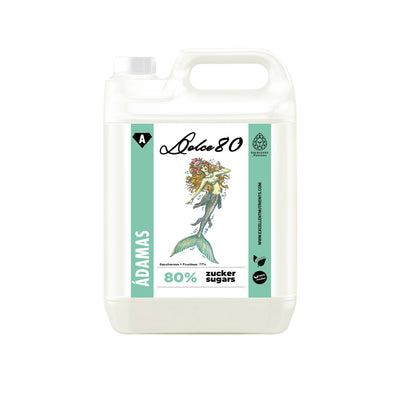
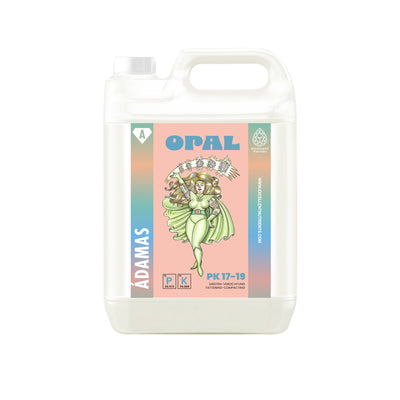
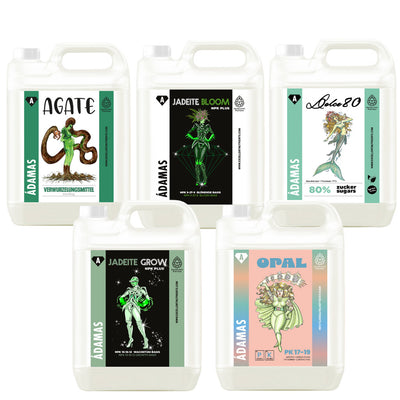
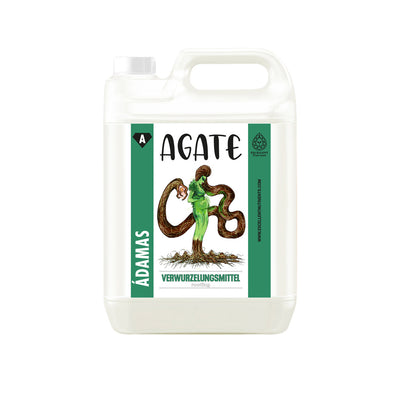
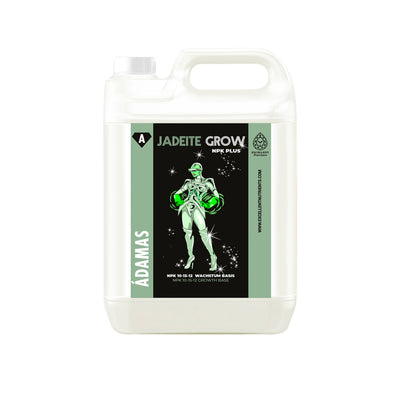
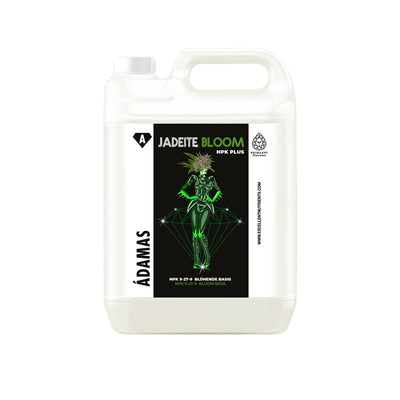
You can find matched nutrients for growth and flowering under buy cannabis fertiliser.
The stage of the plant is also decisive: during the growth stage, different cannabis nutrients take priority than during flowering. Instead of searching for the one best product across the board, you should check which fertiliser suits your medium, your experience level and your control options. Properly chosen, the fertiliser supports stable plants without you having to start in an unnecessarily complicated way.
How to recognise good fertiliser for cannabis
The best fertiliser for cannabis suits the substrate, the stage and the water quality. What matters is a comprehensible nutrient profile, clear manufacturer information and whether the fertiliser is suitable for your cannabis plants, if you want to feed cannabis and provide cannabis nutrients in a targeted way.
Nutrients: nitrogen, phosphorus and potassium
The basic logic of many cannabis nutrients is NPK: nitrogen, phosphorus and potassium. Nitrogen is mainly linked to vegetative development, because the plant needs it for leaf mass and growth. Phosphorus and potassium become more relevant in later stages; phosphorus supports key metabolic processes, and potassium is linked to stability and water balance. What matters is not a blanket ratio, but a fertiliser whose nutrients suit the stage. Micronutrients should also be declared transparently.
Checking pH value, soil and water
When feeding cannabis, it is not just the fertiliser itself that matters. Soil, soil structure, water quality and pH value influence how well plants can absorb nutrients. A suitable pH value is therefore a quality criterion for the whole system. Good products explain which soil and which water they are intended for; a general note is not always enough for optimal plants.
Quality and transparency in hemp fertiliser
A reputable hemp fertiliser makes it clear which ingredients it contains and which substrates you can use it for. Look out for clear declarations, manufacturer information and compatibility with soil or other media. Ideal are products that do not work with vague promises but disclose all relevant information. For cannabis plants, this fits a quality approach like the one that also matters at CBDÍA: a lab certificate per batch, origin with country and growing method, hemp from the EU variety catalogue, and, for shop products, a transparent cannabinoid and terpene profile.

Organic vs. mineral fertilisers
Whether organic or mineral fertilisers suit you better depends on substrate, experience and the desired level of control. A cannabis fertiliser is not automatically the best fertiliser for cannabis just because it works well for other plants in the grow.
Organic fertilisers: advantages and limits
Organic fertilisers work in a soil-oriented way: microorganisms release nutrients gradually, often based on compost, plant residues or animal components. This supports an active soil and delivers nutrients more evenly rather than immediately. Many people appreciate this approach especially in soil, because organic processes can buffer. There are limits, though: organic fertilisers react more slowly, compost cannot be controlled exactly, and anyone who mixes their own hemp fertiliser needs experience with soil and compost.
Mineral fertilisers: fast control
Mineral fertilisers contain nutrient salts that are usually available to the roots more quickly. This allows a fast correction if readings or the appearance of the plant indicate it is needed. Mineral fertilisers can be diluted well, but if applied incorrectly they can more quickly lead to over-fertilisation. Used correctly, they are of particular interest to growers who want to control closely.
Which option suits your plants?
For your plants, what matters is how you grow: in soil and with less measuring effort, an organic cannabis fertiliser makes sense; in coco, hydro or with a strong desire for control, a mineral approach tends to fit better. The best fertiliser for cannabis is therefore context-dependent. Check your experience level, the relevant stage and the product information. Your plants do not need the same scheme every week, but a supply that suits growth, flowering and substrate. That way you find the best approach, without over-dosing.
Fertiliser for every growth stage
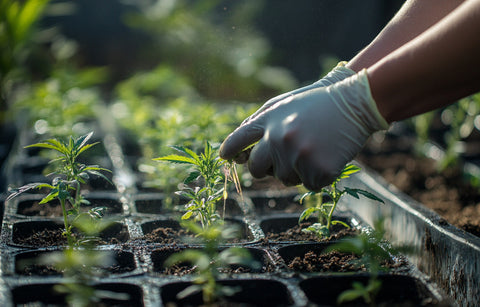
Anyone who wants to feed cannabis should pay attention to the relevant growth stage. After germinating cannabis seeds, seedlings need only a restrained supply; later on, the cannabis nutrients change. A suitable fertiliser supports plants according to stage right into the flowering stage of cannabis, rather than treating every situation the same.
Growth stage: focus on nitrogen
During the growth stage, plants primarily build up leaves, stems and a stable structure. How pruning techniques such as topping fit into this stage is explained in the guide pruning cannabis plants. The vegetative stage is therefore closely linked to growth, without this creating fixed expectations. Nitrogen is one of the important cannabis nutrients because it is involved in fundamental metabolic processes. During the growth stage, the aim is to develop healthy leaves and support growth in a balanced way. Too much nitrogen is not automatically better; what matters is a healthy, vegetative supply that lets plants develop evenly.
Flowering stage: putting phosphorus and potassium into context
During the flowering stage, requirements shift: phosphorus and potassium become more important, though nitrogen also remains a key nutrient during flowering. Phosphorus and potassium are linked to energy balance, cell processes and flower formation. The cannabis nutrients fulfil different roles here, without guaranteeing a particular cannabis harvest. During the flowering stage, the plant needs a supply suited to flowering, especially during blooming and flower formation. Here too: the harvest depends on many factors, not just the flowering stage.
What is the best fertiliser for autoflowers?
Autoflowering plants switch to flowering independently of long light phases, so not every fertiliser suits them equally. What counts as the best fertiliser for cannabis depends, for these plants, above all on a mild supply suited to the stage. When feeding cannabis, you should follow manufacturer information and not only react once visible problems appear. Fixed weekly schedules rarely suit all conditions; what matters more is what the plants actually need.

Correctly assessing soil, water and pH value
Before you feed cannabis or choose a hemp fertiliser, you should correctly assess soil, water and pH value. In cultivation, these underlying conditions also determine whether a fertiliser is a sensible fit at all.
Soil, compost and pre-fertilised substrates
Heavily pre-fertilised soil for cannabis already provides plenty of reserves at the start, while light soil provides less. Organically active substrates with compost rely more on soil life. You should not plan for coffee grounds as a blanket rule: coffee grounds can compact, alter the soil and do not always fit. If used at all, you should only mix it in sparingly and not combine it with other additives, especially not with sensitive hemp plants.
When water alone is no longer enough
Depending on substrate and stage, water alone is not permanently sufficient. Plants need available nutrients, but how long they remain supplied depends on the medium. Cannabis nutrients should therefore suit the existing base, rather than being chosen only by product name.
Correctly feeding cannabis: common mistakes
If you want to feed cannabis, restraint is often more sensible than using many products at once. A common mistake is over-fertilisation: the plants receive more nutrients than they can absorb. This particularly affects young plants such as cannabis seedlings and does not always show immediately. An unsuitable substrate can also cause a cannabis fertiliser to act differently than expected.
It is also problematic to mix several fertilisers or feeding products without clear manufacturer information. Not all products are matched to one another, and not all information suits every stage of the cannabis plants. If you need to use concentrates, you should read the product information carefully and only dilute according to the manufacturer's instructions. A suitable nutrient supply supports the plants, promotes stable development and reduces the risk of over-fertilisation. For cannabis plants, what matters is therefore less about using many products, and more about understandable information, suitable nutrients and cautious assessment.
How to find suitable products at CBDÍA
When assessing suitable products at CBDÍA, it helps to look at your specific need: whether you are looking for cannabis fertiliser for the nutrient supply of your plants or a hemp fertiliser for hemp plants, compare the information on application, on the stage up to harvest, and on composition. The best fertiliser for cannabis is not the same across the board; it should suit the medium, the water values and the condition of the plants.
At CBDÍA, also look out for transparent product information: a lab certificate per batch, origin with country and growing method, hemp from the EU variety catalogue, and a cannabinoid and terpene profile. This lets you assess cannabis-related categories objectively, rather than deciding on price alone. Sale only to adults aged 18 and over; the THC limit is 0.3 per cent. Ideally, all information should be verifiable before you plan your harvest.
Legal notice: private home cultivation of cannabis is governed by Section 9 of the German Consumer Cannabis Act (KCanG): adults aged 18 and over may grow at most three cannabis plants at a time at their place of residence or habitual abode in Germany. This article describes gardening basics and is not a substitute for legal advice. No statements on effects, consumption or dosage. As of: September 2026.