









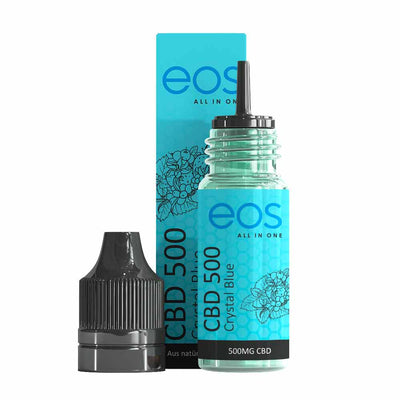
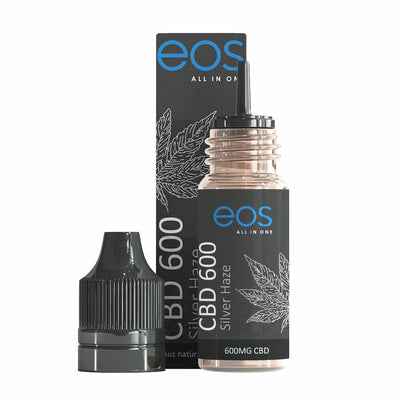
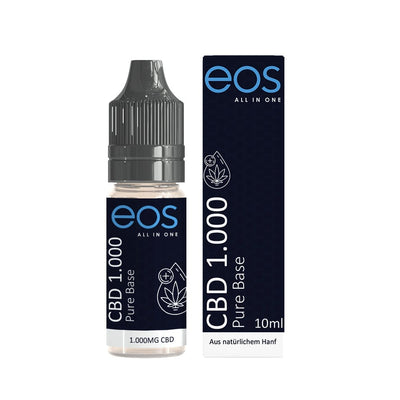
A CBD liquid is a liquid for suitable e-cigarette systems that can contain cannabidiol, or CBD, as an ingredient. This guide makes no statements about effects, use or dosage. Instead, it is about how you assess CBD liquid ingredients, which product information is relevant, and why transparent quality evidence helps when comparing.
I, Jona Decker, explain which details you can check when buying CBD liquid: composition, CBD content, carrier substances, lab analyses and verifiable manufacturer information. This helps you find your way to the right shop category for CBD liquids more easily, without having to rely on unclear claims.
What is CBD liquid? Definition and ingredients
A CBD liquid is a special form of liquid that contains cannabidiol, or CBD, and is intended for suitable devices from the vape or e-cigarette sector. When explaining CBD liquid, the starting point is the product form: unlike general liquids for e-cigarettes, the focus here is not on a flavour or nicotine, but on the added CBD content.
You can find lab-tested liquids and vapes under CBD Liquids and CBD Vapes.
Depending on the product, a CBD e-liquid consists of a carrier liquid, flavourings and CBD. Some CBD liquids are explicitly nicotine-free; reputable products should also transparently state CBD content, ingredients and THC limits. Whether a CBD liquid is legal depends, among other things, on its composition and the applicable requirements.
Terms such as CBD vape, vaping or vaporising describe, in this context, mainly the technical classification of the liquids.
What should you look out for when buying?
If you want to buy CBD liquid, you should not rely on experiences, reviews or general promises. More meaningful are verifiable details about content, quality and production. Reputable providers make transparent which CBD liquid ingredients are included, how high the CBD content is, and whether the product is legally marketable. Precisely because the market covers many different liquids, clear declarations help with an objective comparison.
Checking the lab certificate per batch
A current lab certificate per batch is one of the most important buying criteria. It should match the specific CBD liquid and not just apply generally to a product line. Check whether the cannabinoid profile is stated, how much CBD is contained, and whether the THC value is verifiably below the permitted limits. Other cannabinoids may also be listed. This helps you better recognise whether the declaration and the analysis match, and whether the provider provides transparent proof of quality rather than just advertising with claims about CBD.
Assessing origin, hemp and growing method
With CBD liquids, it is worth looking at the origin of the hemp. Transparent manufacturers state the country, the growing method and ideally the hemp variety used from the EU variety catalogue. If a CBD liquid is manufactured or bottled in Germany, this should also be clearly identifiable. Such details do not automatically say everything about a product, but they are an important building block for traceability. You should be particularly critical of products without clear origin information or with imprecise content.
Comparing the cannabinoid and terpene profile
CBD liquid ingredients differ considerably depending on the formulation. Some liquids contain isolated CBD, others a broader profile with additional cannabinoids and terpenes. With a full-spectrum approach, several plant components can be included, provided all values are cleanly declared. For your selection, it helps to objectively compare possible differences between liquids: CBD content, carrier substances, flavourings, profile information and evidence must all match up.

Comparison with oil and other product forms
CBD liquid belongs to the CBD products that are classified in the context of vaping, e-cigarettes or a suitable vaporiser pen. Unlike other forms, the focus here is not on an oil base, but on a liquid-typical composition for vaporising. Liquids are therefore usually compared based on ingredients, CBD content, flavour and declaration.
Difference to CBD oil
A CBD liquid differs from CBD oil and from dried CBD flower mainly through its carrier base and product logic. While CBD oil is usually based on an oil such as hemp seed oil or MCT oil, liquids mostly use a base of propylene glycol, vegetable glycerine and flavourings. The declaration is also different: for CBD oils, the focus is often on drops, concentration and extract type, while for liquids it is more about fill volume, CBD content and suitability for devices. CBD oil is therefore not a better or worse category, just a different one.
Classification compared with classic e-liquids
A CBD e-liquid is a special product group within e-liquids. Classic variants are often flavoured liquids for e-cigarettes and, depending on the product, can contain nicotine. CBD liquids instead contain CBD as a declared ingredient, and the labelling should show whether further cannabinoids, terpenes or flavourings are included. When vaping via a vape, the focus is therefore mainly on distinguishing it from the normal e-liquid category and from other CBD product forms, not on usage instructions.
Ingredients: what's inside?
The CBD liquid ingredients should be clearly legible on the label: carrier liquid, CBD content, flavourings and, where applicable, further profile information. With CBD liquids, it is worth looking at the contents so you can objectively compare a CBD e-liquid, similar to the CBD shop comparison. Terms such as natural ingredients, plant-based profile, pure formulation or full spectrum describe product characteristics here, but do not replace a transparent declaration.
PG, VG and vegetable glycerine
Among the CBD liquid ingredients, PG and VG usually form the base. PG stands for propylene glycol, a thin, free-flowing carrier component. VG refers to glycerine, often declared as vegetable glycerine, and is more viscous. Many liquids use a PG-to-VG ratio that should be stated on the bottle. This lets you quickly identify the content of the carrier base.
Flavourings, terpenes and taste
Flavourings give CBD liquids their taste character, for example fruity, fresh or neutral. It is important that flavourings are clearly named and not just vaguely described. Terpenes may also be listed, especially if they come from cannabis or the hemp plant. Taste remains a product characteristic and should be assessed soberly: what matters is whether the information is complete and understandable.
Cannabidiol and other cannabinoids
When explaining CBD liquid, CBD stands for cannabidiol, an ingredient from hemp. The amount of CBD should be clearly stated on the label, usually in milligrams or per cent. Some liquids additionally name further cannabinoids. A note on THC may also appear, usually as a lab or limit value. For comparison, what counts is that the content is verifiably stated, a characteristic that also helps you recognise a good CBD shop.

Strengths, varieties and CBD vape variants
When comparing a CBD liquid, you will come across many liquids with different percentages, flavourings and technical classifications. This information mainly describes product characteristics: CBD content, base liquid, flavour varieties, possible compatibility and notes such as 'nicotine-free'. In our categories, CBD liquids can therefore be objectively classified by strength, variety and variant.
From mild to high: strengths without recommendations
When buying CBD liquid, you will find different strengths, usually given as a percentage value or a milligram figure per bottle. Terms such as mild, medium or high are also just range classifications.
Classifying CBD vape, vape pen and device compatibility
Depending on the product, a CBD e-liquid may be described as a CBD vape liquid, for a vape pen, or for a specific device. Such details help to classify the category technically, without explaining a use. Important are product details such as fill volume, cartridge type, base and manufacturer notes. Whether a pen, vaporiser or vape system fits results from the details of the respective CBD vape product.
Legality, THC and quality evidence
Is the liquid legal in Germany?
CBD liquid is legal in Germany if it comes from approved hemp and the THC content does not exceed the limit of 0.3 per cent. When buying, look for a lab certificate for each batch: it should state the CBD content, possible residues and whether the liquid matches the declared information.
Only for adults aged 18 and over
If you want to buy CBD liquid, the following applies: sale is only to adults aged 18 and over. Reputable products state origin, growing method and ideally hemp from the EU variety catalogue. This makes it easier to check quality and transparency, similar to the best CBD flowers; CBD liquids are not free of controls, and all information should be verifiable.
Conclusion: how to classify CBD liquids
That explains CBD liquid: it is about composition, strength and personal requirements, not blanket promises. In the CBDÍA shop you will find suitable products related to CBD and can classify different variants of CBD liquid in a targeted way.
Note: This article is for general information purposes and does not replace medical or legal advice. No claims of healing, effects or health, no recommendations on consumption or dosage. Sale only to adults aged 18 and over. As of: September 2026.


