



CBC: Knowledge About Cannabichromene

CBC Effect: What Is Known About Cannabichromene

Jona Decker von Jona Decker29.09.2026 3 Min. Lesezeit

Das Wichtigste in Kürze

The essentials at a glance

  • There are mainly cell and animal studies on cannabichromene; human studies are largely lacking.
  • In cell experiments, CBC activated the CB2 receptor and the ion channel TRPA1; the findings on the CB1 receptor are inconsistent.
  • CBC is considered non-intoxicating.
  • No effect has been demonstrated for freely available products, and CBDÍA does not describe any either.
  • What a flower contains is shown by the lab certificate per batch; it says nothing about effects.
Getrocknete Hanfblüte neben einer Lupe, Sinnbild für die Forschung zur CBC Wirkung

What is known and what is not

Here you will find what is currently known about the effect of cannabichromene and where research reaches its limits. The article reports on cell studies and review papers, makes no claims of healing or effect and gives no dosage. For health questions, medical advice is the right place to turn.

CBDÍA products are not medicinal products. This article summarises the state of research and makes no claims of healing, effect or usage recommendations. For health questions, medical advice helps.

Regarding the effect of CBC, i.e. cannabichromene, there are so far mainly laboratory and animal studies. Robust human studies are largely lacking, and no effect has been demonstrated for freely available products. This article reports what review papers and cell studies describe about cannabichromene, where research reaches its limits and what a lab certificate can say about it. It makes no claims of healing or effect and gives no dosage.

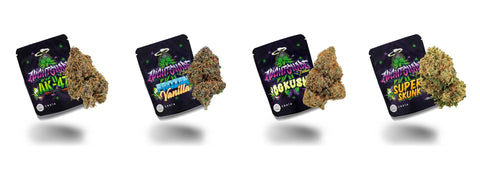
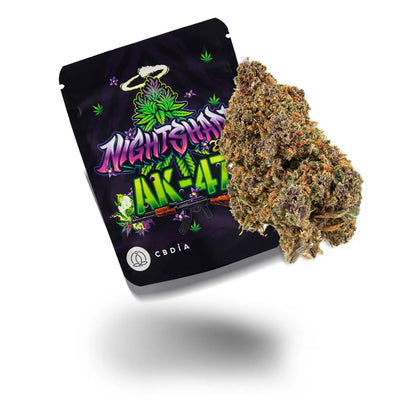
For context first: CBC is a cannabinoid of the hemp plant that forms alongside CBD and THC but is far less researched. In industrial hemp strains with a higher CBC content, it occurs as part of the natural cannabinoid profile, for example in the CBC flowers in the shop, whose values are stated in the lab certificate per batch. How cannabichromene forms and how it is classified legally is explained in the fundamentals article what is CBC.

CBC Effect and the Endocannabinoid System: What Studies Describe

The endocannabinoid system is the body’s own signalling system with the cannabinoid receptors CB1 and CB2, endogenous messenger substances such as anandamide, and the enzymes that form and break down these messengers. For cannabichromene, research describes several possible points of interaction, all so far from cell models and animal experiments:

  • CB2 receptor: in a 2019 cell study, CBC activated the CB2 receptor on cells, but not the CB1 receptor.
  • CB1 receptor: whether and how CBC acts on the CB1 receptor has been investigated inconsistently; individual studies found binding, several others found no activation.
  • TRP channels: a 2011 laboratory study describes CBC as an activator of the ion channel TRPA1, which is involved in relaying stimulus signals in cells.
  • Endogenous messengers: in the same study, CBC inhibited the uptake of anandamide into cells in the cell experiment.

Such findings show what a substance interacts with in the lab. They say nothing about whether and how this plays out in the human body.

Does Cannabichromene Get You High? Distinction from Intoxication

Cannabichromene is considered non-intoxicating. A 2024 review attributes this to the fact that CBC did not activate the CB1 receptor in several studies. It is precisely via this receptor that THC unfolds its intoxicating effect; what THC is and how it is legally limited is explained in the article what is THC. Cannabidiol, too, is described as non-intoxicating; how CBD can be classified as a compound is set out in the article what is CBD.

For the classification of flowers, this means: a high CBC content does not change the THC value. The flowers at CBDÍA are below 0.3 percent THC, regardless of which other cannabinoids they contain; the lab certificate states both values separately.

Preclinical Research: What Laboratory and Animal Models Show, and What They Do Not

Review papers from 2021 and 2024 summarise a number of cell and animal studies on cannabichromene. They describe CBC as a subject of research with many open questions and point to contradictory results regarding the mechanism of action. There is also a fundamental limitation: findings from cell cultures and animal models cannot simply be transferred to humans, let alone to everyday products.

Interaction with Other Cannabinoids

CBC is often mentioned in connection with the so-called entourage effect, that is, the assumption that cannabinoids and terpenes influence each other. The 2021 review speaks of a presumed interplay in this context. No statement about products follows from this; which combination would even be relevant remains open.

Why There Is Hardly Any Data on the Effect in Humans

The 2024 review notes that the distribution of CBC in the human body has so far only been studied together with CBD and THC, not as a single compound. It also points out that CBC products are sold freely and used, even though there is hardly any evidence of their safety or effectiveness, and that further studies on safety and tolerability in humans are needed.

Unlike THC and CBD, there is no approved medicine for cannabichromene. Anyone wanting to read the evidence on cannabidiol for comparison can find it in the article CBD effect.

What a Lab Certificate Says About Cannabichromene

A lab certificate answers a different question from research: not what a substance does in the body, but what is contained in a specific batch. It states CBC and its acid form CBCA, CBD, THC and other cannabinoids such as cannabigerol individually; what CBG is all about is explained in the article what is CBG. This makes it possible to check whether a flower actually has a notable CBC content and whether the THC value is below 0.3 percent. At CBDÍA, the lab certificate for the respective batch is publicly accessible. It makes no statement about effects in humans.

This article is for general information purposes only and does not replace medical advice. As of: September 2026.


Our CBD flowers at a glance

View all
Sale
Sold Out

Frequently asked questions about the effect of CBC

Regarding the effect of CBC in the body, there are so far only findings from cell and animal models. They describe, among other things, activation of the CB2 receptor and the TRPA1 ion channel; the results for the CB1 receptor are inconsistent. What this means for humans is not established.

No, CBC is considered non-intoxicating. A 2024 review article attributes this to the fact that cannabichromene did not activate the CB1 receptor, through which THC produces its intoxicating effect, in several studies.

No. The effect of CBC on humans is not proven, because controlled studies in humans are lacking. Even its distribution in the body has so far only been studied together with CBD and THC. No claim of effect for freely available products can be derived from this.

The entourage effect refers to the assumption that CBC, other cannabinoids and terpenes influence one another. Review articles speak of a presumed interaction; it is not proven in humans, and which combination would be relevant remains open.

No, unlike THC and CBD, there is no approved medicinal product for CBC. A 2024 review article describes cannabichromene as the subject of preliminary research and calls for further studies on safety and tolerability in humans.

There is no robust human data on the effect of CBC from which a quantity could be derived. CBDÍA therefore gives no dosage and no recommendation for use. What a flower contains is shown by the lab certificate for the respective batch.

Sources

These sources support the factual statements in this article.

  1. Cannabichromene is a cannabinoid CB2 receptor agonist (Br J Pharmacol 176(23):4537-4547, DOI 10.1111/bph.14815), Udoh, Santiago, Devenish, McGregor, Connor; British Journal of Pharmacology, Wiley (2019)Supports that CBC activated the CB2 receptor but not the CB1 receptor in cell experiments and is among the more common phytocannabinoids.
  2. Effects of cannabinoids and cannabinoid-enriched Cannabis extracts on TRP channels and endocannabinoid metabolic enzymes (Br J Pharmacol 163(7):1479-1494, DOI 10.1111/j.1476-5381.2010.01166.x), De Petrocellis, Ligresti, Moriello et al.; British Journal of Pharmacology, Wiley (2011)Supports that CBC activated the ion channel TRPA1 in the cell experiment and inhibited the cellular uptake of anandamide.
  3. The Potential of Cannabichromene (CBC) as a Therapeutic Agent (J Pharmacol Exp Ther 391(2):206-213, DOI 10.1124/jpet.124.002166), Sepulveda, Vrana, Kellogg et al.; Journal of Pharmacology and Experimental Therapeutics (2024)Supports that the findings on CBC at the CB1 receptor are contradictory, that the lack of CB1 activation is consistent with the lack of intoxicating effect, that pharmacokinetics in humans has only been studied together with CBD and THC, and that CBC products are sold without sufficient evidence of safety and efficacy.
  4. Minor Cannabinoids: Biosynthesis, Molecular Pharmacology and Potential Therapeutic Uses (Front Pharmacol 12:777804, DOI 10.3389/fphar.2021.777804), Walsh, McKinney, Holmes; Frontiers in Pharmacology (2021)Supports that minor cannabinoids such as CBC are studied at several target structures, that an interplay of cannabinoids is presumed, and that pharmacological knowledge is incomplete.
  5. An Introduction to the Endogenous Cannabinoid System (Biol Psychiatry 79(7):516-525, DOI 10.1016/j.biopsych.2015.07.028), Lu, Mackie; Biological Psychiatry, Elsevier (2016)Supports that the endocannabinoid system consists of cannabinoid receptors, endogenous messengers such as anandamide, and the enzymes for their formation and breakdown.
About the author

Jona Decker

Jona Decker is an author and editor specialising in CBD, cannabinoids and cannabis law. He studied business administration with a specialisation in empirical economic research and has been writing about cannabidiol since 2020. He has written for the magazine CBD360 since October 2020, where he now also co-heads the editorial team. For CBDÍA, he classifies products objectively, based on the lab certificate for each batch and documented origin.