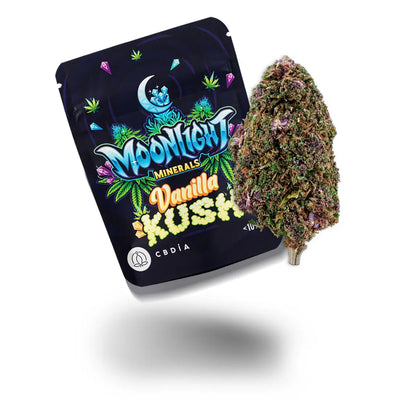







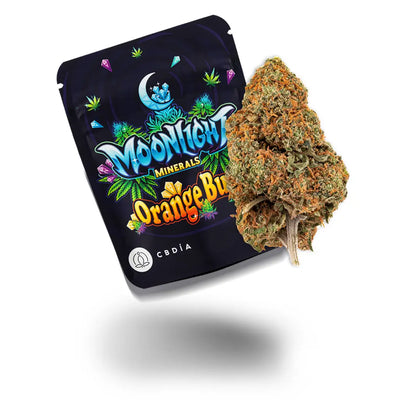
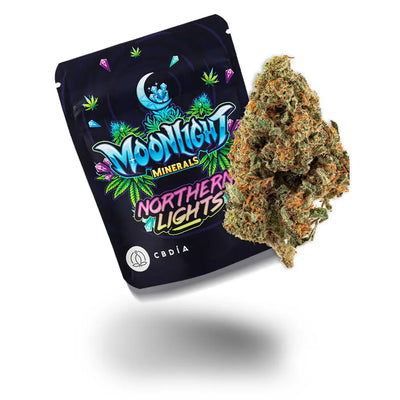
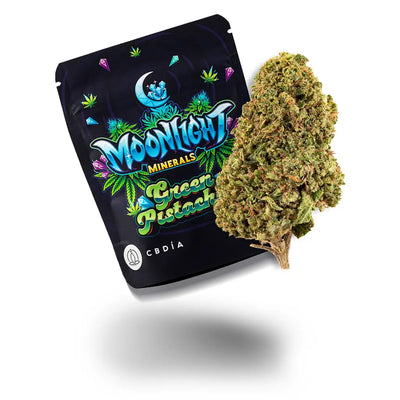
Anyone searching for "CBG vs CBD" usually wants to know how the two terms can be classified: botanically in the cannabis plant and chemically within the group of cannabinoids. This article by Jona Decker therefore compares CBG and CBD factually at the level of origin, structure and role in the plant. It is not about health promises, dosages or recommendations for consumption. The ranges can be found in our CBG flowers and under CBD flowers.
CBG stands for cannabigerol, CBD for cannabidiol. Both compounds occur naturally in cannabis, but differ, among other things, in when and in what quantity they appear in the plant. The difference between CBG and CBD already begins with biosynthesis: CBG is considered a precursor from which other cannabinoids can form, while CBD is usually regarded as a later conversion product. The following explains the most important differences between cannabigerol and cannabidiol in an understandable way.
CBG vs CBD: What Is the Key Difference?
The key difference in CBG vs CBD is that these are two different cannabinoids: CBG stands for cannabigerol, CBD for cannabidiol. Both occur in the hemp plant, but differ in their molecular structure, their natural occurrence and thus also in their chemical properties. Anyone searching for "difference CBG CBD" therefore means not just a different name, but two distinct plant substances.
CBG forms in close connection with CBGA, an acidic precursor from which the plant can subsequently also form other cannabinoids. This is why CBG is found mainly in early plant stages, or usually only in comparatively small amounts in mature plants. CBD, on the other hand, is markedly more common in many industrial hemp categories and is often described there as one of the dominant cannabinoids.
Whether CBG or CBD is the focus therefore initially depends on the botanical and chemical perspective. Neither is to be equated with THC, even though they belong to the same substance group. Statements about effects should be considered separately from this basic distinction: CBG and CBD are above all two different cannabinoids with different roles in the plant.
What Is CBG?
CBG Is Cannabigerol: Name and Molecule
CBG is the abbreviation for cannabigerol. The term refers to an independent cannabinoid with its own molecular structure and clearly defined chemical identity. CBG thus belongs to the group of cannabinoids but is not the same as CBD: cannabigerol and cannabidiol differ at the substance level in their structure and form in the plant via different chemical steps. In the context of CBG vs CBD, this is initially about two different molecules, not an assessment of their properties.
CBGA as a Precursor in the Cannabis Plant
A key role in understanding CBG is played by CBGA, the acidic starting form of cannabigerol. In the cannabis plant, CBGA is considered an important precursor from which further cannabinoids can be formed by the plant's own enzymes. Depending on the genetic makeup and degree of ripeness of the plant, CBGA is partly converted into other cannabinoid acids. As a result, the direct share of CBG remains comparatively low in many varieties, which is why CBG naturally often occurs only in smaller amounts. The difference between CBG and CBD therefore already begins with biosynthesis: from CBGA, the plant first forms CBDA using the enzyme CBDA synthase, from which CBD is formed by decarboxylation. The chemical view of CBG therefore covers both the molecule itself and CBGA as the starting point of its formation.

What Is CBD?
CBD Is Cannabidiol: Chemical Classification
CBD is the abbreviation for cannabidiol and refers to an independent molecule from the group of cannabinoids. Chemically, CBD belongs to the natural constituents of the cannabis plant, but differs in structure and position within the plant's metabolism from other compounds. In the context of cannabigerol and cannabidiol, this is initially about two different cannabinoids, not variants of the same substance. CBD is known above all as a term because it is listed separately in many analyses and product categories. Its properties can be factually described via molecular structure, occurrence and concentration. How cannabidiol is obtained and classified is shown in the guide What Is CBD.
Why CBD Is More Common
In many EU industrial hemp varieties, CBD occurs in higher amounts than CBG. This is related to the genetics of the hemp plant and the enzymatic conversion processes during ripening. CBG is often present as a precursor from which further cannabinoids can form in the plant's metabolism. As a result, less CBG often remains at the end, while CBD is deliberately more pronounced in certain varieties. For the difference between CBG and CBD, it is therefore not only chemical details that are relevant, but also breeding, variety selection and available quantities of raw material. This explains why CBD products are much more widely represented on the market than categories around CBG, without deriving any statements about application or benefit from this.
How Do CBG and CBD Differ in the Plant?
Botanically, both cannabinoids differ mainly in when and in what quantities they occur in the cannabis plant. For the comparison CBG vs CBD, the course of ripening is therefore decisive.
CBG or CBD: Comparison by Occurrence
Anyone comparing CBG or CBD first encounters the different frequency in the plant material. CBD is deliberately present in higher proportions in many industrial hemp varieties and is therefore more often the basis for oils, extracts or flower products. CBG, on the other hand, is usually present only in smaller amounts, unless the variety is specifically bred for it. The difference between CBG and CBD therefore lies not only in the chemical structure, but also in the typical concentration within the plant.
CBG and CBD in the Ripening Process of the Hemp Plant
CBG and CBD are botanically closely related, because CBG, as described in the article what is CBG, traces back to precursors such as CBGA. In the hemp plant, CBGA serves as the starting point from which various cannabinoids can form during the ripening process. CBG is therefore particularly relevant in early developmental phases, while CBD comes more to the fore later in suitable varieties. With CBG vs CBD, it is therefore also about timing: both cannabinoids do not form in isolation, but in the interplay of natural plant development.
Classifying Other Cannabinoids Only in General Terms
Besides CBG, CBD and other substance groups, other cannabinoids also form in cannabis metabolism, which are only classified here in general terms. For the botanical comparison, it is enough to understand their role as accompanying substances. THC is mentioned in this context mainly because of regulated limit values (basics under what is THC); a detailed listing of further substances is not necessary for the difference between the two cannabinoids.

Extraction, Analysis and Legal Situation in Germany
CBG vs CBD is not only about CBG effect, but also about raw materials, analysis and regulation. The difference between CBG and CBD shows particularly in how often both substances occur in the plant and how elaborate their testing is.
Extraction and Analysis Methods
For extraction, plant components are extracted and then purified so that the composition remains traceable. CBG is present in many hemp varieties only in smaller amounts, while CBD is usually more readily available. Analysis methods such as HPLC or GC are used to identify cannabinoids and determine their proportions. This allows checking which substances are actually contained.
Lab Certificate, THC Limit and Germany
A lab certificate typically documents the content of CBG, CBD and THC as well as other relevant measured values. For the legal situation in Germany, it is important, among other things, that hemp is considered industrial hemp if it comes from certified seed of varieties in the EU variety catalogue or contains at most 0.3 percent THC, in each case only for commercial or scientific purposes without misuse for intoxication (§ 1 No. 9 KCanG). Whether products can be classified as legal additionally depends on category, presentation and intended purpose. The THC value is therefore only one building block of the assessment.
Availability and Price Differences
The question of CBG or CBD also concerns availability. CBG products are often rarer, because special varieties, harvest times and additional analyses may be necessary. CBD categories, on the other hand, are more established and usually more widely available. As a result, products with CBG can be positioned differently in price, without this automatically implying a statement about quality.
Study Situation: Classify Chemically, Do Not Evaluate
Studies on cannabigerol (CBG) and cannabidiol (CBD) mainly help to classify both cannabinoids chemically, botanically and analytically. This is about structure, occurrence in the cannabis plant and measurable properties, not an evaluation of effects or CBG experiences. The study situation on CBG is less broadly researched compared to CBD; in addition, studies are differently informative depending on method, starting material and context. Research therefore remains limited and should not be read as a recommendation.
Conclusion: CBG or CBD?
CBG vs CBD is mainly about chemical structure, biosynthesis, occurrence in the plant, availability and price. CBG stands for cannabigerol, CBD for cannabidiol; both are cannabinoids, but differ in their role within the hemp plant. Anyone comparing CBG or CBD should therefore look less for blanket assessments and instead classify the differences factually; anyone wanting to get to know the CBD side of this comparison themselves before the first purchase can try CBD flowers for free. The difference between CBG and CBD also shows in product properties: reputable products can be traced through clear labelling, ingredient information and a current lab certificate.
Note: 18+, Law and Health
This article and any offers are aimed exclusively at adults aged 18 and over. The information on CBD and CBG replaces neither legal advice nor medical advice. Whether a product is legal depends on the applicable requirements in Germany; legal frameworks can change. As of: August 2026. This is not a recommendation for consumption, dosage or application.