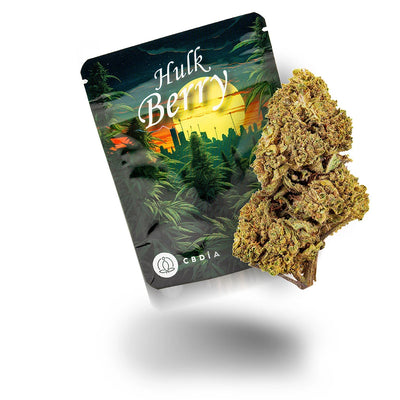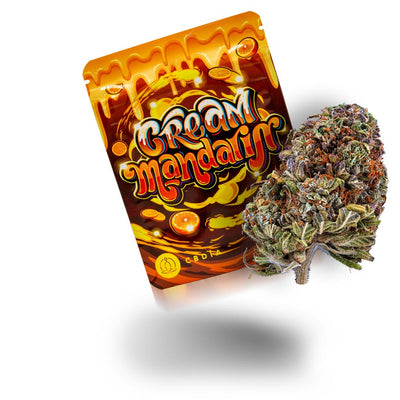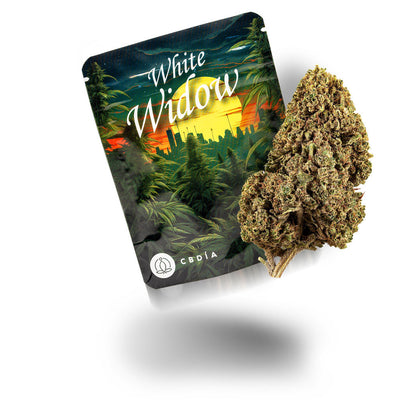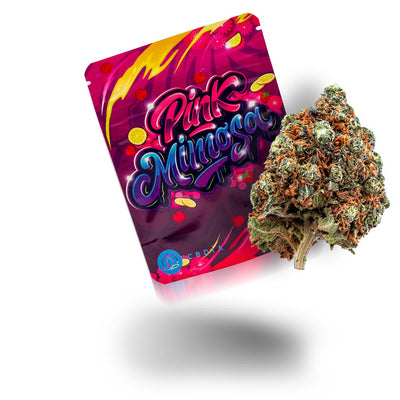







Limonene is a cyclic monoterpene, a volatile aroma compound that smells of lemon and orange. It is the main component of the oil in citrus peels, but it also occurs in many other plants, including mint and hemp.
Here you will learn what limonene is chemically, how d- and l-limonene differ, where the substance occurs and how to read it in a terpene profile. How the aroma compounds of the hemp plant interact overall is explained in the guide on terpenes in cannabis. You can find strains with a citrus-forward profile among our CBD flowers from EU hemp, each with a laboratory certificate for the batch.
Limonene profile: formula, scent and boiling point
Limonene has the molecular formula C10H16 and, like myrcene, belongs to the monoterpenes, but has a cyclic structure. The substance is colourless, slightly volatile, dissolves well in fat and barely in water. For d-limonene, the substance database PubChem gives a boiling point of 177.6 °C at standard pressure.
| Substance class | Monoterpene (cyclic) |
|---|---|
| Molecular formula | C10H16 |
| Scent | d-limonene lemony and orangey, l-limonene sharper, minty |
| Occurrence in nature | Peels of lemon, orange, grapefruit and mandarin, mint oils, hemp |
| Boiling point | around 178 °C at standard pressure for d-limonene (source: PubChem, CRC Handbook) |
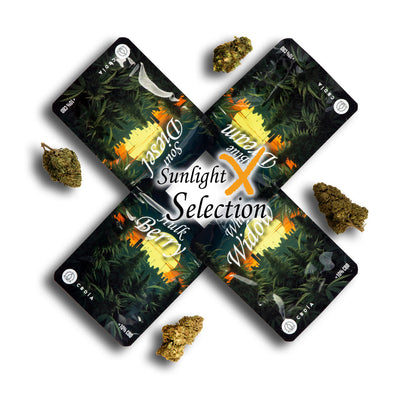
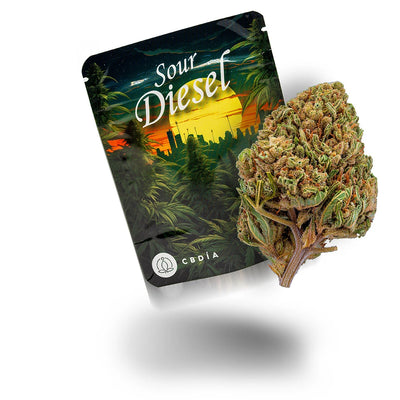
| In CBDÍA's range according to terpene profile | CBD flowers Sour Diesel, Blue Dream, Sour Mango and L.A. Amnesia |
Two mirror images: the d- and l-form
Limonene exists in two mirror-image forms, so-called enantiomers. They have the same formula and the same connectivity of atoms, but are spatially mirrored, like a left and a right hand. The nose can tell them apart: D-limonene, also (+)-limonene, smells pleasantly of lemon. A 2020 review describes that it is obtained by cold-pressing citrus peels, whose oil consists of more than 90 percent d-limonene. L-limonene, also (-)-limonene, is found more often in mint oils.
Where does the substance occur and what is it used for?
Citrus fruits provide the largest share: when peeling an orange, the oil glands of the peel are ruptured and the typical scent rises, largely limonene. Smaller amounts are found in herbs, spices and conifers.
Economically, limonene is an important flavour and fragrance compound for food, beverages, cosmetics and cleaning products. In agricultural and food research it is being studied whether limonene can replace synthetic preservatives and plant protection products. Because the substance is volatile and dissolves poorly in water, researchers are working on encapsulations that protect it and release it slowly.
Three related aroma compounds compared
In hemp terpene profiles, three monoterpenes appear together particularly often. All three have the molecular formula C10H16, but differ in structure, scent and boiling point. The boiling points come from the substance database PubChem and apply at standard pressure.
| Limonene | one ring, citrus scent, boiling point around 178 °C |
|---|---|
| Myrcene | open chain, earthy and herbal, boiling point around 167 °C |
| Alpha-pinene | two rings, resinous like pine, boiling point around 156 °C |
The differences in boiling point are one reason why laboratories can separate terpenes by gas chromatography and report them as individual values. For you as a reader, this means: a profile with limonene, myrcene and pinene describes three different substances, even though they are chemically closely related.
What role does it play in the terpene profile of hemp?
Hemp forms limonene in the glandular hairs of its flowers. The form is interesting: in the hemp variety Finola that was studied, mainly (-)-limonene formed, i.e. the l-form, not the d-limonene of citrus peels. Among the most common monoterpenes in the resin there, myrcene and alpha-pinene were also found; among the sesquiterpenes, beta-caryophyllene led the way.
In the terpene profile of a strain, limonene stands for the fresh, bright citrus note. It rarely determines the smell on its own: together with myrcene a profile appears fruity-earthy, together with linalool more floral-fresh. The values apply to a batch, since cultivation, harvest and storage change the content of volatile terpenes. At CBDÍA, the terpene profile is therefore stated alongside the laboratory certificate, country of origin, cultivation type and the THC content below 0.3 percent.
Detecting limonene in a flower does not imply any statement about an effect. The terpene profile describes the aroma, nothing more.
This article is for general information purposes only and does not replace medical advice. Terpenes are described here as aroma and plant compounds, not as active substances. As of: September 2026.