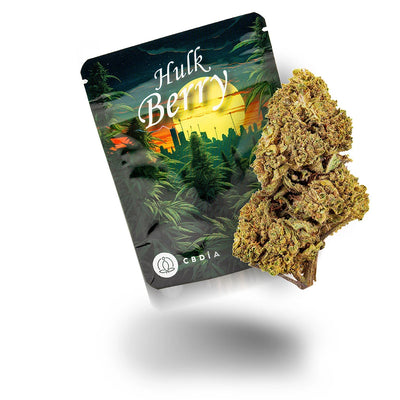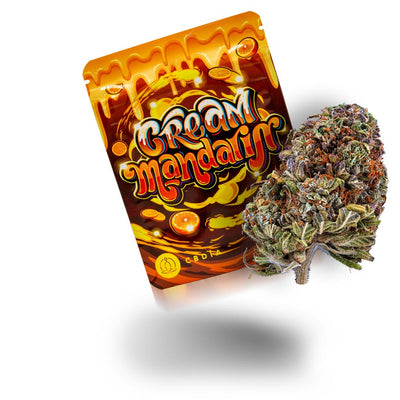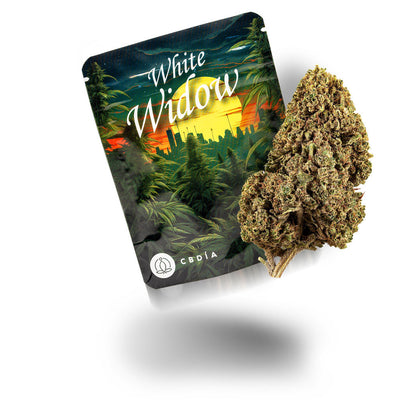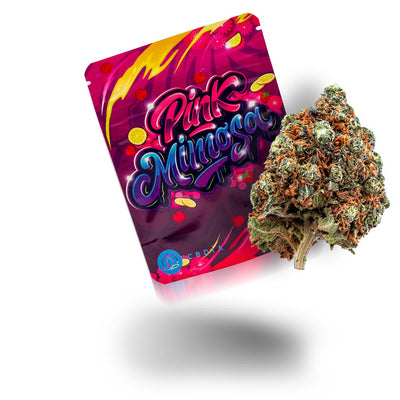






Myrcene is a monoterpene, i.e. a small, volatile aroma compound from the terpene group that smells earthy, herbal and slightly fruity. It almost always refers to beta-myrcene, which occurs in hops, lemongrass, bay laurel and in hemp, where it is among the most commonly reported aroma compounds.
This glossary article explains the substance chemically, describes its scent and occurrence, and shows how you can read the figure in a terpene profile. An overview of all aroma compounds of the hemp plant can be found in the guide Terpenes in cannabis. Which strains carry myrcene in their profile can be seen among our CBD flowers: there, the terpene profile is stated for every strain, along with origin, cultivation type and a laboratory certificate per batch.
Myrcene profile: chemistry, scent and boiling point
Chemically, beta-myrcene is an open-chain monoterpene with the molecular formula C10H16. Monoterpenes consist of two isoprene units, are slightly volatile and dissolve well in fat, barely in water. Because myrcene already evaporates at moderate temperatures, it contributes strongly to a plant's smell. According to the substance database PubChem, the boiling point is 167 °C at standard pressure.
| Substance class | Monoterpene (open-chain) |
|---|---|
| Molecular formula | C10H16 |
| Scent | earthy, herbal, slightly balsamic and fruity |
| Occurrence in nature | Hops, lemongrass, verbena, bay laurel, hemp |
| Boiling point | around 167 °C at standard pressure (source: PubChem, CRC Handbook) |
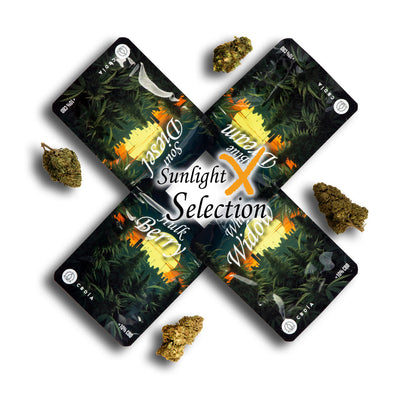
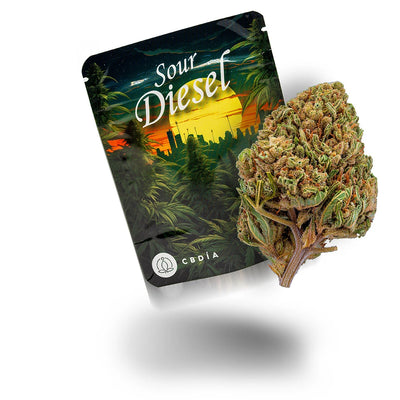
| In CBDÍA's range according to terpene profile | CBD flowers Sour Mango, White Widow, Orange X, Pink Mimosa and Cream Mandarin; CBD hash Frozen Beldia and Golden Caramel |
Where does the aroma compound occur in nature?
Beta-myrcene is found in very many plants. A 2021 review mainly names the essential oils of hops, hemp, lemongrass, verbena and bay laurel as well as citrus fruits. In beer brewing it is considered one of the defining aroma compounds of hop oil. The food industry uses myrcene as a flavour and fragrance compound.
How much myrcene a plant contains varies greatly. Plant species, variety, ripeness, climate and processing shift the proportion. This is why two hop varieties or two hemp strains smell different despite sharing terpenes.
What role does it play in hemp?
Hemp forms its terpenes together with the cannabinoids in the glandular hairs of the flowers, the trichomes. In an examination of the hemp variety Finola, myrcene was among the most abundant monoterpenes by amount, alongside pinene, limonene and terpinolene. Among the larger sesquiterpenes, beta-caryophyllene led the way.
For you as a reader of a terpene profile, this means: myrcene is more the rule than the exception in hemp. The figure only becomes meaningful in relation to the other terpenes. A profile in which myrcene is listed first usually smells more earthy and herbal; if limonene is added, a fresh citrus note joins in. The values apply to a specific batch in each case, since cultivation, harvest, drying and storage change the terpene content.
At CBDÍA, the terpene profile is stated on every product page, together with the laboratory certificate of the batch, the country of origin, the cultivation type and the THC content below 0.3 percent. A profile becomes floral rather than earthy, incidentally, through linalool, which also gives lavender its scent.
Related aroma compounds: distinguished in one sentence each
Myrcene is easily confused with other terpenes because many of them share the same molecular formula C10H16. The difference lies in the structure of the molecule, and that determines the smell:
- Limonene has the same formula but is cyclic in structure and smells of citrus peel rather than herbs.
- Pinene has two connected rings and brings the resinous scent of conifer wood.
- Linalool shares the open carbon skeleton with myrcene but carries an alcohol group and therefore smells floral.
- Ocimene is a close relative with differently arranged double bonds and a sweetish, herbal scent.
In a terpene profile, these substances are therefore listed as separate values. Anyone comparing two strains pays less attention to a single name than to the order: which terpene is listed first, which follows? This determines whether a flower smells more earthy, citrusy, resinous or floral.
What research examines
Beta-myrcene is the subject of numerous laboratory and animal studies. The 2021 review summarises this work and at the same time states that studies in humans are largely lacking. No statement about an effect can therefore be derived from the detection of myrcene in a flower.
What is factually robust, by contrast, is the chemistry, scent and occurrence: myrcene is a widespread plant aroma that hemp forms together with many other terpenes and that can appear as a separate value in a laboratory analysis.
This article is for general information purposes only and does not replace medical advice. Terpenes are described here as aroma and plant compounds, not as active substances. As of: September 2026.