






Beta-caryophyllene is a sesquiterpene, a larger aroma compound from the terpene group that smells peppery, spicy and woody. It is found in cloves and many other spice and food plants, and in hemp it is among the most common terpenes of its size class.
The glossary article explains what caryophyllene is chemically, where it occurs, why it is mentioned in cannabinoid research, and how you can read it in a terpene profile. An overview of all aroma compounds of the hemp plant is given by the guide Terpenes in hemp and cannabis. Strains with a spicy profile can be found among our CBD flowers, each with a laboratory certificate for the batch.
Beta-caryophyllene profile: chemistry, scent and boiling point
Sesquiterpenes consist of three isoprene units and are therefore larger than monoterpenes such as limonene. Beta-caryophyllene has the molecular formula C15H24 and an unusual ring structure with a four-membered ring. Because it is heavier, it evaporates more slowly: the substance database PubChem gives a boiling point of 256 to 259 °C at standard pressure, considerably higher than for most monoterpenes.
| Substance class | Sesquiterpene |
|---|---|
| Molecular formula | C15H24 |
| Scent | peppery, spicy, woody |
| Occurrence in nature | Clove oil, essential oils of many spice and food plants, hemp |
| Boiling point | around 256 to 259 °C at standard pressure (source: PubChem) |
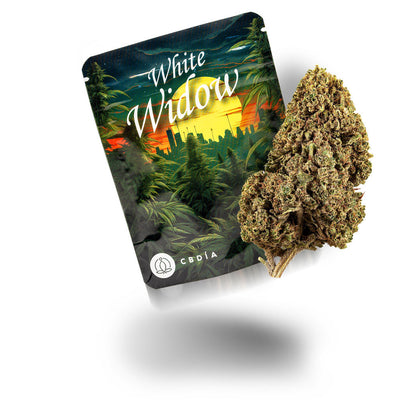
| In CBDÍA's range according to terpene profile | CBD flowers Gorilla Glue, White Widow and Hazelnut Cookies; CBD hash La Crème, Golden Caramel and Vanilla Cream |
Where does the substance occur in nature?
Beta-caryophyllene is widespread in the plant world. The substance database names it as the most common form in many essential oils, and the oil of the clove is especially rich in it. The 2008 study describes it as a widespread component of the essential oils of numerous spice and food plants. Through spices, people therefore ingest caryophyllene with food quite routinely.
A close relative is humulene, formerly called alpha-caryophyllene. Both share the same molecular formula but differ in structure and scent. In hops and hemp they often occur together.
Ten or fifteen carbon atoms: the two size classes
Terpenes are classified by the number of their building blocks. Monoterpenes consist of two isoprene units and have ten carbon atoms, sesquiterpenes of three units with fifteen carbon atoms. This size has consequences you notice in everyday life:
- Monoterpenes such as myrcene, limonene and pinene boil between about 156 and 178 °C, beta-caryophyllene only at around 256 to 259 °C.
- Smaller molecules evaporate more easily and shape the first olfactory impression of a flower, larger ones tend to act as a spicy base note.
- In laboratory analyses, monoterpenes and sesquiterpenes are often listed in separate groups.
In hemp, beta-caryophyllene is the best-known representative of the sesquiterpenes, alongside humulene, bergamotene and farnesene. Anyone reading a terpene profile will therefore often find it as the only sesquiterpene among several monoterpenes.
Why does research call it a dietary cannabinoid?
A 2008 laboratory study showed that beta-caryophyllene selectively binds to the cannabinoid receptor CB2. The authors therefore called it a dietary cannabinoid because it comes from spices and food. Chemically, it remains a terpene like pinene and is not a phytocannabinoid like CBD, even though both are formed in the same glandular hairs of the hemp flower.
Binding to a receptor in cell experiments and animal models is a research finding, not a proven effect in humans. What significance beta-caryophyllene from spices or hemp has for the body continues to be researched and is not settled.
What role does it play in hemp?
Hemp forms beta-caryophyllene in the glandular hairs of the flowers. In the hemp variety Finola that was studied, it was among the most common sesquiterpenes together with humulene, while among the monoterpenes myrcene led the way. In a terpene profile, caryophyllene stands for the spicy-peppery base note; together with the floral linalool, a profile appears softer. At CBDÍA, the terpene profile is stated alongside the laboratory certificate, country of origin, cultivation type and the THC content below 0.3 percent.
In CBDÍA's range, the terpene profiles name beta-caryophyllene for example in the flowers Gorilla Glue, White Widow and Hazelnut Cookies and in several hash varieties. There it appears alongside monoterpenes such as myrcene, pinene, ocimene or camphene. Detecting caryophyllene in a flower does not imply any statement about an effect; the terpene profile describes the aroma of a strain, not its benefit.
This article is for general information purposes only and does not replace medical advice. Terpenes are described here as aroma and plant compounds, not as active substances. As of: September 2026.